




Bill calls for reintroduction of predator ‘capable of killing deer’ in Colorado
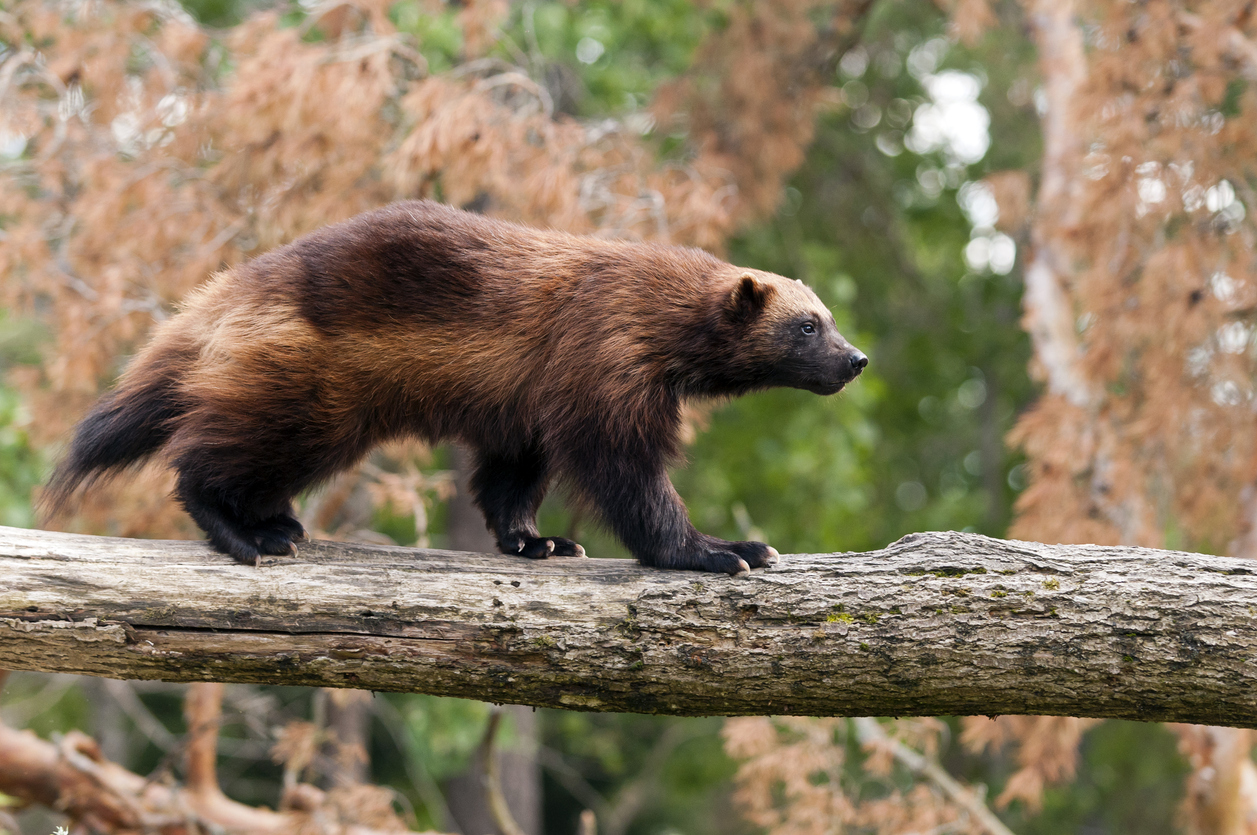
A bipartisan effort is underway in Colorado, aiming to reintroduce wolverines to the state.
The attempt to formally reintroduce this predator species has spanned decades, having started in 1998, though has yet to be met with success. That may change with the proposed SB24-171, which follows the November 2023 listing of the North American wolverine as a ‘threatened’ species under the Endangered Species Act.
According to Colorado Parks and Wildlife, there was once a viable population of wolverines in the state, but this was last confirmed in 1919. Multiple surveys from 1979 to 1996 revealed no confirmed sightings, though a wolverine was tracked traveling into northcentral Colorado in 2009. As stated in the proposed bill, there are an estimated three hundred to four hundred wolverines left in the lower 48 states of America.
The bill that calls for the reintroduction of the wolverine also creates a requirement for the parks and wildlife commission to adopt rules for compensation of owners of livestock for potential impacts of the wolverine.
Livestock depredation by wolverines are rare, though in one Utah instance, the attack of 18 sheep was attributed to a wolverine, with some of those sheep being killed. It’s worth noting that while wolverines generally consume small rodents, rabbits, birds, fish, plants, and carrion, they have been known to kill large ungulates when those animals are weakened and bogged down in snow during winter months.
Colorado Parks and Wildlife says that Colorado has the potential to support roughly 100 wolverines at full carrying capacity, with the species naturally existing in low numbers wherever they are found – it’s worth noting that the proposed bill notes a higher potential carrying capacity of 180. In general, the animal needs large areas of cold and rocky habitat to thrive with large roaming areas and a mostly solitary life. Most of the Centennial State land of this nature would consist of high-elevation public lands.
If the bill is ultimately passed, it would call on Colorado Parks and Wildlife to design, implement, and lead a science-based reintroduction plan. Reasons stated in the bill for the reintroduction include protecting and enhancing the state’s biodiversity. Wolverines tend to serve as a sort of ‘clean-up crew,’ as a unique mammal scavenger and predator.
Republican State Senator Perry Will and Democrat State Senator Dylan Roberts along with State Representative Barbara McLachlan and State Representative Tisha Mauro – both Democrats – are behind the push.
Colorado Parks and Wildlife included the following ‘key components’ in their press release on the matter:
- “As long as the North American wolverine remains on the list of threatened or endangered species pursuant to the federal act, CPW will not reintroduce the species in the state until the effective date of a final rule designating the wolverine in Colorado as a nonessential experimental population.
- CPW will work cooperatively with federal land management agencies with jurisdiction over federal public lands where North American wolverines may be released in Colorado.
- The Parks and Wildlife Commission shall adopt rules providing for payment of fair compensation to owners of livestock for losses of livestock caused by the North American wolverine.
- Before the reintroduction effort occurs, CPW will prepare and deliver a report on the North American wolverine in the state. CPW will also prepare a report for each of the five years after the reintroduction of the North American wolverine occurs.
- CPW may not use funds generated from the sale of hunting and fishing licenses or from associated federal grants to implement the reintroduction.
- The bill authorizes the CPW Director to use $750,000 from the Species Conservation Trust Fund for the reintroduction effort. The funds would become available in the state fiscal year 2024-25″
Wolverines have a reputation for their bravery, known to fight off much larger predators, including bears, despite only weighing up to 40 pounds. They are generally not a threat to humans.
The wolverine reintroduction bill has a status of being proposed and is under consideration. More details will follow in weeks to come.
STAY INFORMED: Get free Colorado news with our daily newsletter (Click here)
Get OutThere
Signup today for free and be the first to get notified on new updates.
PREV
PREVIOUS

Denver area events
If you have an event taking place in the Denver area, email information to [email protected] at least two weeks in advance. All events are listed in the calendar on space availability. Tuesday Sipping N’ Painting Hampden — “Moonlight Waterfall,” 6:30-8:30 p.m., Sipping N’ Painting Hampden, 6461 E. Hampden Ave., Denver, $35. Registration required: sippingnpaintinghampden.com. Jacob […]

Mark Kiszla: Wilson's exit leaves behind a mess in Broncos Country
As much as Broncos Country would like to forget the Russell Wilson error, inducing amnesia for the biggest blunder in team history would be an even bigger mistake for an NFL franchise that has been fooling itself for too long. Let every one of those 85-million dead presidents in record-setting dead money against the salary […]