




Hikers could get $25,000 fine after getting “tired” and requesting emergency assistance

A group of eight hikers may be facing charges under the ‘Canada Parks Act’ after violating a closure order, according to local news source Jasper Local. Officials were made privy to the situation after two of the hikers in the group requested emergency services because they were too “tired” to continue.
Jasper Local reports that “visitor safety technicians found no injuries justifying the call for assistance,” with the hikers merely being too tired to complete their hike up Pyramid Mountain on September 10, which is in an area where access has been closed by officials.
As a result of the call for help, the hikers were airlifted by a helicopter, pulling one of two helicopters in the area from its work to stop a wildfire for about three hours.
The maximum fine for violating an area closure is $25,000 per person, per the Canada National Parks Act. This fine is quite a bit higher than those stemming from similar national park violations in the United States, with Rocky Mountain National Park noting that entering closed areas can result in a fine of $5,000 and six months imprisonment.
While this case took place abroad, it touches on an important issue that matters in the Centennial State, too. Hikers and other outdoor recreators should avoid entering closed spaces for a number of reasons outside of potential legal ramifications, including those related to safety, wildlife protection, and preservation.
This case highlights how important it is to be aware of current rules and regulations in places one is planning to recreate, as consequences for not doing so can be severe.
The (closed) hike up Pyramid Mountain is 17 miles with close to 6,000 feet of gain, per AllTrails. It reaches an elevation of about 9,075 feet above sea level.
It’s also worth noting that Colorado Search and Rescue is free to call and those who may be in need of help should not hesitate when it comes to asking for assistance. Search and rescue encourages requesting help sooner than later, as waiting may further complicate a given situation. While search and rescue response is free, charges may be associated with transportation from the scene, be it in an ambulance or an aerial asset.
If you’re interested in supporting Colorado’s volunteer-powered search and rescue operation, one way to do so is through the purchase of a CORSAR card. It’s cheap, at only $5 per year.
Get OutThere
Signup today for free and be the first to get notified on new updates.
PREV
PREVIOUS
Ted Budd praises ‘resilient people’ impacted by hurricane in North Carolina
Sen. Ted Budd (R-NC) praised North Carolina residents for helping each other in the wake of Hurricane Helene, a weather phenomenon of which he has “never seen anything like this.” North Carolina is one of several south-eastern states that have been affected by the hurricane, which has so far killed at least 192 people. While […]
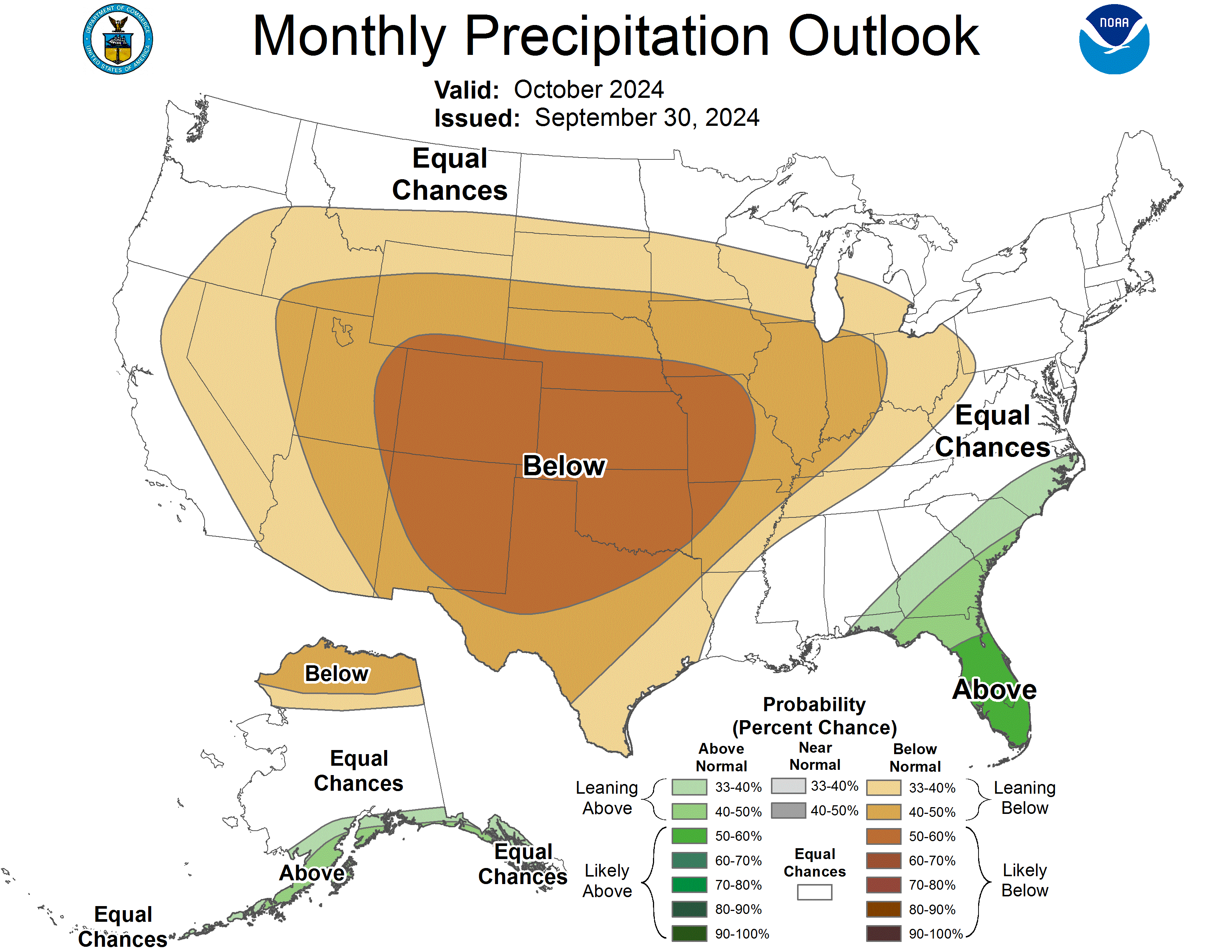
Colorado at 'epicenter' of above-average temperatures expected in US this October
It won’t take more than a glance for Coloradans checking out the National Weather Service’s monthly outlook for October to think “Yikes!” Much of America is likely to have above-average temperatures this month, with Colorado sitting at the epicenter of where these toasty temps are most likely. In additional to the hot temperatures, the state […]