




List of 5 ‘most endangered’ historical spots in Colorado released
Colorado Preservation, Incorporated has released their 2024 list of the ‘most endangered places’ in the Centennial State, featuring a number of historical spots that are ‘at-risk’ due to various factors.
The organization has been working to protect historically significant places in Colorado for 40 years, with the goals listed on the group’s website being to promote “historic preservation statewide by providing advocacy, education, outreach, and preservation services to all communities and individuals.”
During their existence, the group has worked to save more than 130 endangered places, ultimately saving 54 as of 2022. Of the 130-plus historic sites the group has addressed, fewer than 10 have been lost.
Find the five ‘most endangered places in Colorado’ below, along with a description of each spot provided by Colorado Preservation, Inc.:
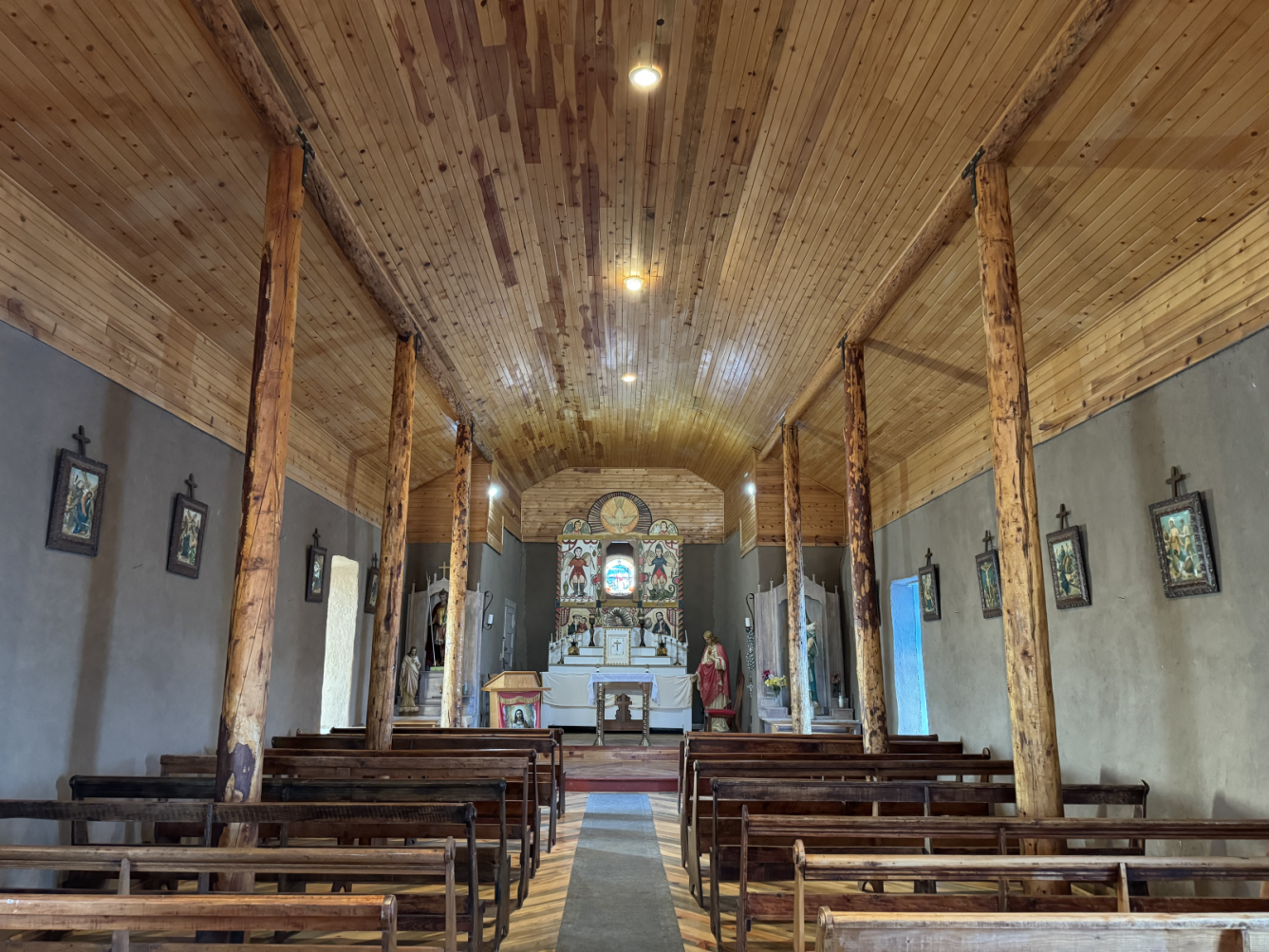
1. Costilla County Mission Churches, San Luis Valley
“Churches, parishes, and irrigational ditches embody communal living in the San Luis Valley. For generations, the Valley’s residents have relied on these assets and their local community to survive. However, these resources have become increasingly difficult to maintain with the dwindling population. As part of the Sangre de Cristo Land Grant, a Mexican land grant to help establish efforts to settle the northernmost regions, Costilla County is home to the oldest permanent settlements in Colorado. These pobladores, or settlers, brought their religious and social customs north, many of which are still practiced in the San Luis Valley today. Many towns established during this mid-19th century period were named after Catholic saints for protection. The churches constructed in the few years after settlement soon formed the backbone of the mission towns and still reflect the continuity of community. The nine churches associated with this listing are all owned by the Diocese of Pueblo and are in varying degrees of condition. Mayordomos, or caretakers of the town’s irrigation ditches and churches, do everything they can to protect these buildings and make repairs as they are needed. In cases like the Iglesia de San Pedro y San Pablo (Church of Saint Peter and Saint Paul), minor repairs can unfortunately only go so far. Due to a crumbling bell tower, the building has been condemned and its furnishings removed. The roof of the Iglesia de la Inmaculada Concepción (Church of Immaculate Conception) is in failing condition, and water damage has caused sections of the adobe wall to collapse. Apart from the Capilla de Viejo San Acacio (Chapel of Old Saint Acacius), the Mission Churches of Costilla County have never gone under large-scale rehabilitation.”
2. Kit Carson Museum Complex, Bent County

“When the Bent County seat moved from nearby Boggsville to Las Animas in 1876, the city constructed a small brick building to serve as the jail. The building was witness to what was considered one of the earliest hangings in Colorado statehood when James “Jimmy” Miller, a Buffalo Soldier stationed at nearby Fort Lyon, was convicted of murder and subsequently hanged. The larger adobe building, constructed in the 1940s, was home to a Prisoner of War (POW) camp for German officers during World War II. POWs were sent to neighboring farms to be agricultural workers. The crop yield eventually exceeded expectations, and many German POWs employed their learned farming techniques in their own homes when they returned after the war. This building is one of the few remaining German POW camps in Colorado. The barracks were also home to one of four Jamaican migrant farm working camps in Colorado. Brought to the United States through a guest worker program, 99 Jamaican farmers worked in the fields of Colorado, where, unlike the German POWs, they were not welcomed or appreciated for their work. Mexican laborers and the Bracero program eventually replaced the Jamaican workers. The barracks are believed to be the last standing building directly linked to the underrepresented and under-researched Jamaican presence in Colorado. The buildings served as Las Animas’ museum from 1961 to 2009. Since the opening of the new John W. Rawlings Museum a few blocks up the road, the buildings have sat empty, exposed to the elements and need serious repair.”
3. Valmont School, Boulder County
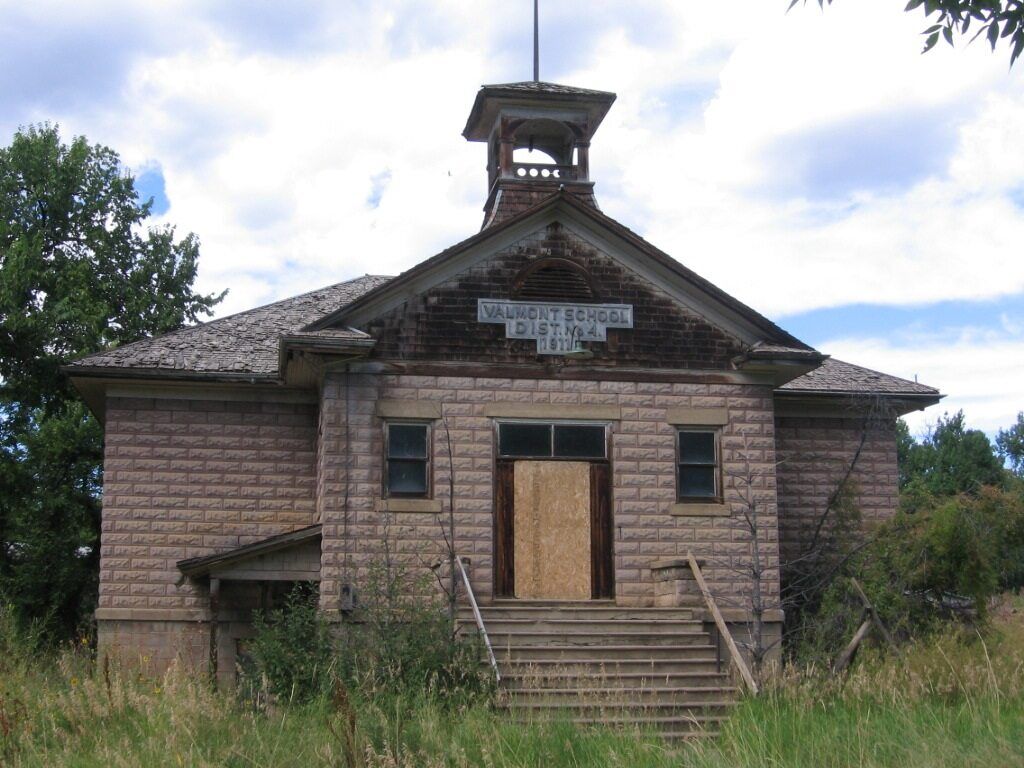
“Platted in 1865, the town of Valmont, located in Boulder County, experienced a boom during the period of Colorado’s statehood and was even a contender for the county seat of newly established Boulder County. At one point, Valmont boasted three blacksmith shops, two general stores, two hotels, three doctor’s offices, and three saloons. In 1911, the Valmont School was constructed to replace the older 1870s building, which eventually became the teacherage. Divided into two rooms with a removable door, the School held grades up to the 9th year. The lower grades shared a room, while the higher grades shared the other. Students came from all directions, and many rode horses and ponies that were kept in a small shelter during the school day. The school also served as a community center and held events like elections, board meetings, square dance classes, and Christmas programs. The Valmont School closed in 1951 with the final spring graduation of its students and the consolidation of neighboring rural school districts. The building has sat vacant since the early 1980s, has severe water damage to the bell tower, and the roof is in failing condition. However, the Valmont School is an excellent representation and perhaps the best existing example of Harmon S. Palmer’s ornamental concrete block architecture. Patented in Colorado in 1899, Palmer’s concrete block machine was instrumental in the mass production of hollow concrete blocks. This construction method became extremely popular by the time the Valmont School was built and was even advertised in mail-order catalogs like Montgomery Ward and Sears. The School is one of the only buildings left in Valmont.”
4. Victor Bowling Alley, Teller County
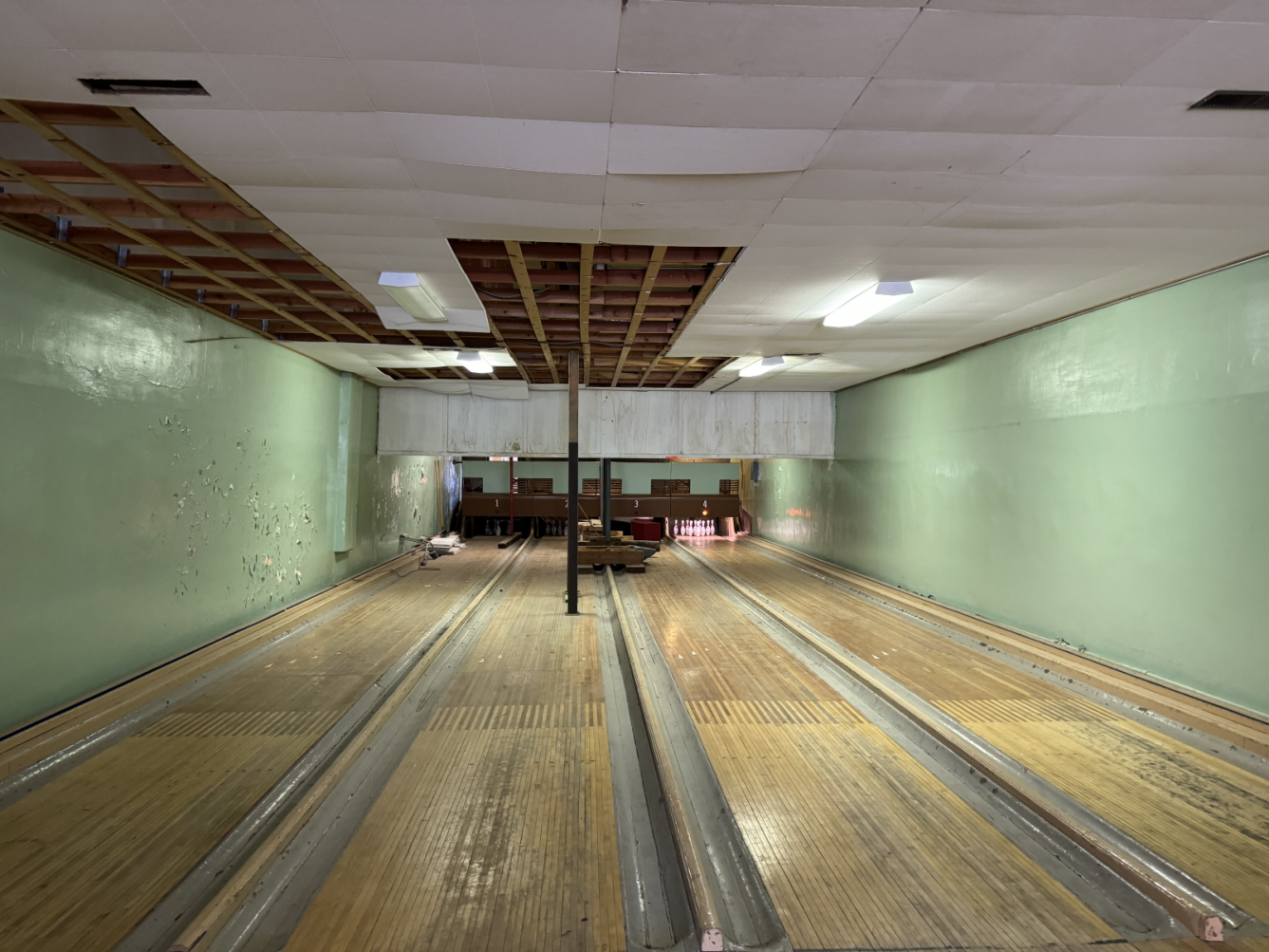
“In August 1899, in the booming mining town of Victor, Colorado, a woman smoking a cigarette, walked outside to wash laundry. At that time, kerosene was a popular ingredient in laundry detergent. The woman’s cigarette found its way into the washtub, and the ensuing fire quickly became out of control. In a matter of a few hours, 12 blocks of Victor’s business district were left in shambles. By April of 1900, however, most of the businesses and buildings had been rebuilt, and Victor’s population had swelled to over 12,000. Included in the rebuild was Ketelsen Grocery, a small store serving the local residents. By the late 1930s, new owners had transformed the interior into a four-lane bowling alley. The venue held and hosted many bowling tournaments throughout the years and was popular with the Cripple Creek Junior League during the 1960s. Today, the Historic Victor Bowling Alley is still operational with its manual pinsetters, a rare feature. Although the building is believed to be in decent condition, supporting beams hold the roof on three of the four lanes. In 2020, the building was sold to Steve and Bee Morgan, who, after filming a feature film in Cripple Creek-Victor, fell in love with the area and its history. They hope to restore the Bowling Alley to full-time use and serve as a catalyst for other historic building owners in downtown Victor to provide spaces for families and children away from the local gambling districts.”
5. Zuni Steam Power Plant, Denver County
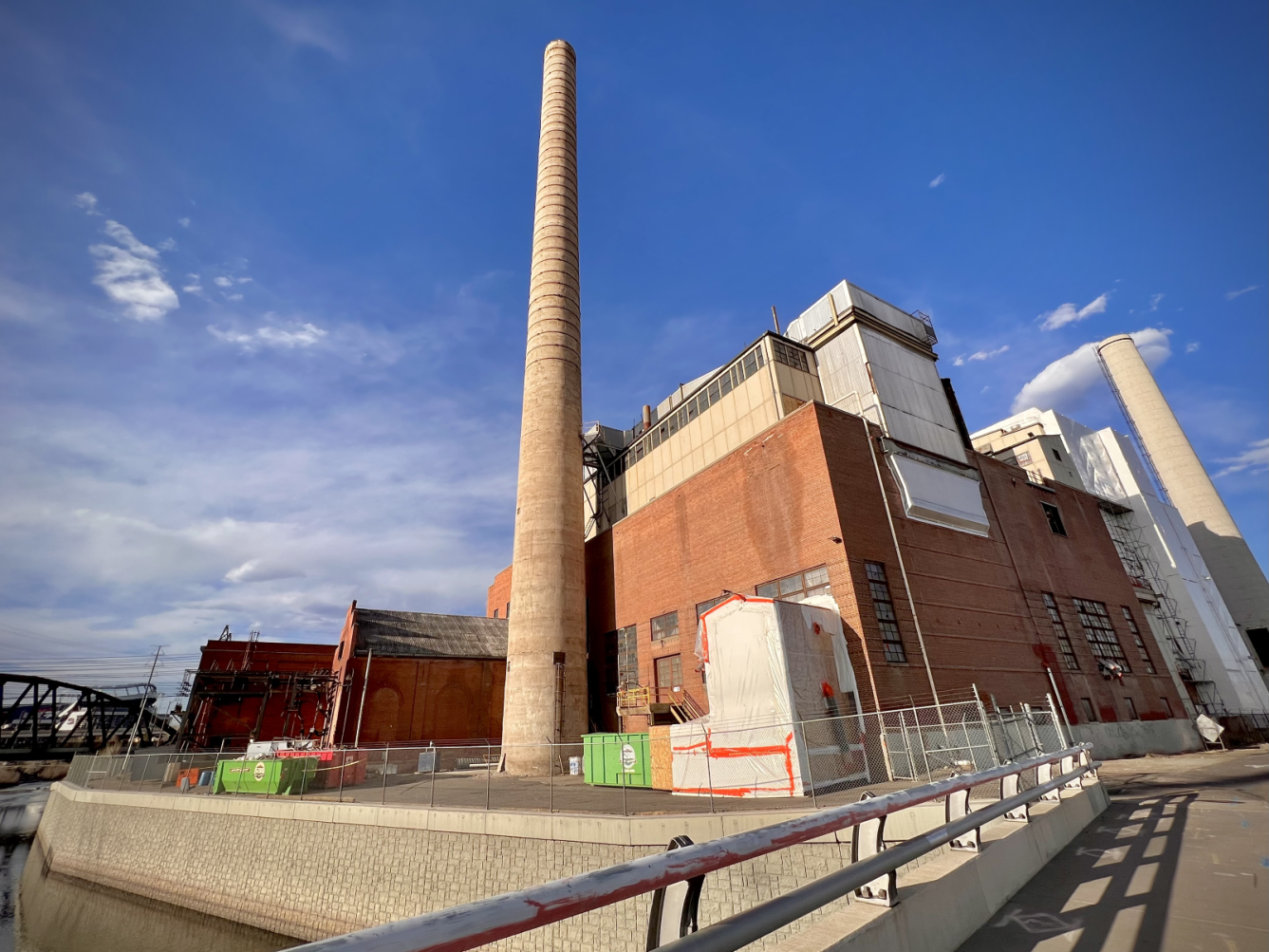
“Before April 1901, Denver had only one electric light and power plant to provide electricity for the city’s growing population. In March 1900, Charles F. LaCombe and his beneficiaries received a franchise to build an electric power plant, breaking the monopoly of the Denver Consolidated Gas and Electric Company. The LaCombe Power Plant operated less than a year before rate wars and lawsuits forced LaCombe to sell to Denver Gas and Electric in 1902. The plant underwent additions during the 1910s and 1940s to meet the increasing demand for electricity. In 1952, it was renamed the Zuni Station and continued to operate until 2015, providing power to the city. Xcel Energy, formerly Denver Gas and Electric, used the plant to provide steam heat to downtown Denver until 2019. Today, the Zuni Steam Power Plant sits vacant. In 2020, Xcel selected demolition contractors, and remediation work began in 2021. This caught the attention of local residents, including the Sun Valley Community Coalition and the La Alma Lincoln Park Neighborhood Association. In November 2021, 10 members of the Denver City Council signed a statement to Xcel Energy, requesting to halt demolition to allow time for community input and preservation opportunities. Negotiations are ongoing, but remediation of the plant continues.”
Also on the topic of ‘endangered places,’ the organization noted that two spots listed in previous years have been recently marked as ‘saved,’ while another previously listed spot was deemed to be ‘lost.’
Fraser’s Bar 4 Ranch, located in Grand County, was originally listed as an ‘endangered place’ in 2014 and is now considered to be ‘saved.’ The Paris Mill in Park County was originally listed in 2004 and is now also considered ‘saved.’
Meanwhile, Denver’s 16th Street Mall is now considered ‘lost,’ first listed as an endangered place in 2009.
Learn more about Colorado Preservation, Inc. and their mission here. Prior ‘endangered places’ nominations can be found here.
Get OutThere
Signup today for free and be the first to get notified on new updates.
PREV
PREVIOUS

Littleton resident Jim Knous set to make first PGA Tour start in 18 months | Golf Insider
Monday was a special day for professional golfers from Colorado. While Denver native and reigning U.S. Open champion Wyndham Clark was declared the winner of the Pebble Beach Pro-Am due to weather concerns, another Coloradan was in Scottsdale, Ariz., making news. Basalt native and current Littleton resident Jim Knous fired a 7-under 64 and survived […]

A taste of Top Chef in Colorado: Chef Manny Barella hosts pop-up dinners at Cantina Loca
Colorado foodies will have a prime opportunity to sample offerings from a local contestant from the upcoming season of Bravo’s Top Chef, well before the new season premieres on March 20. Chef Manny Barella, culinary director at Camp Pickle and Jaguar Bolera, was announced as the sole Colorado contestant on the upcoming season. Bravo announced […]