







From the ranch to the bench: The forging of Sandra Day O’Connor | Vince Bzdek
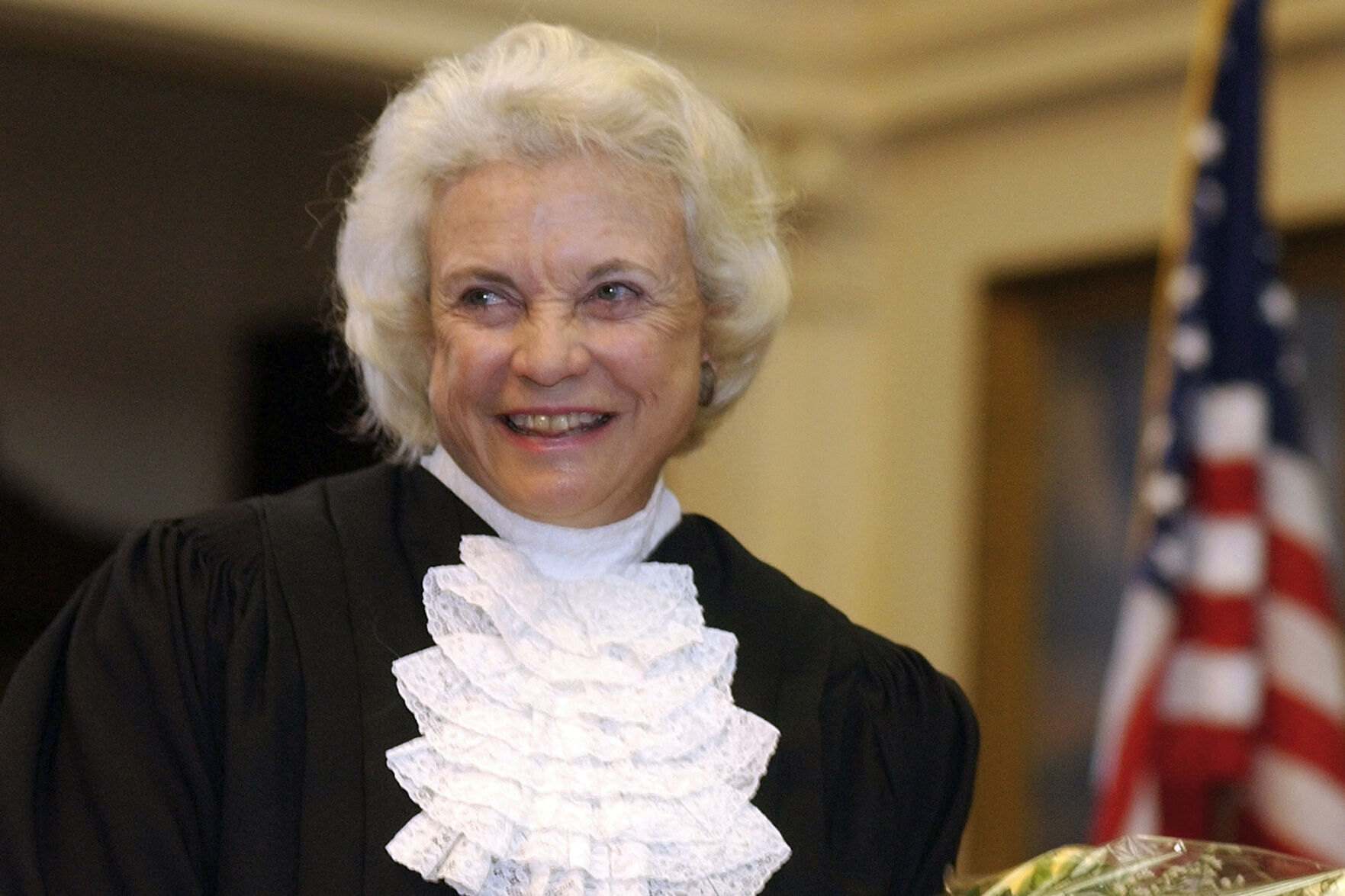
Sandra Day O’Connor, the first female Supreme Court justice and one of the most influential women of her era, was a quintessential daughter of the West.
Her flinty independence was forged on a high desert ranch in Arizona, alongside a passel of rawhide-tough cowboys.
“It was no country for sissies,” she wrote in her memoir of the Lazy B, where she lived in a house without running water or electricity in her early years. “We saw a lot of life and death there.”
Her upbringing of roping calves and fixing pickups was nothing like her male contemporaries on the Supreme Court.
“Before I rode occasionally on the roundup, it had been an all-male domain,” O’Connor recalled in the book. “Changing it to accommodate a female was probably my first initiation into joining an all-men’s club, something I did more than once in my life.”
Her son Brian, a graduate of Colorado College, says that ranch made her who she was.
“It gave her an appreciation for that way of life, the Great American West,” Brian said in an interview, “the hard work that farmers and ranchers have. But also, particularly, becoming self reliant.” The 360-square-mile ranch along the Arizona-New Mexico border was many many miles from anything. “You can’t go down to the corner to have a tire fixed. If there’s fences to be mended … you learn to do it yourself.”
“We grew up in an adobe house” for example, Brian recounted. “It’s mud. You could see the straw coming out of the walls. Every couple of years she would get out the pails of skim milk and we’d literally brush the entire house to preserve the adobe. From being at the ranch she just learned to be very hands on.”
Brian likes to tell one particular story about his mom and the Lazy B. “In 1944 there was a 14-year-old girl looking out the kitchen window of her ranch house, whereupon she sees this flash of light and this incredible fireball rising in the sky, runs to get her parents, my grandparents,” Brian told me. “All the cowboys are out of the bunkhouse, none of them knowing what they had seen. It was only weeks later when the bombs were dropped on Nagasaki and Hiroshima that my family … came to realize that they had actually witnessed the first atomic detonation in the history of mankind by their own eyes.”
_____________
O’Connor died on Dec. 1 at the age of 93 after a long life of trailblazing on the way to becoming an American icon. Her funeral will be held in the National Cathedral in Washington on Dec. 13.
President Ronald Reagan plucked O’Connor from a midlevel appeals court in Arizona to be the first woman on the Supreme Court in 1981. In an interview for the job in the Oval Office, Reagan and O’Connor bonded over their mutual ranch connection, “cowboy to cowgirl,” Brian said. Reagan had a ranch in the Santa Ynez mountains in southern California.
O’Connor gave the commencement address at Colorado College in Colorado Springs in 1982 shortly after she was picked because Brian was graduating.
Brian still has the speech on his computer to this day and keeps a hard copy in a drawer near his desk. He says the words are still relevant for college graduates now. In the speech O’Connor made the point that some of the best arguments she heard in her early days on the court had been made by lawyers who could be characterized as unknowns, and that sometimes the arguments of the famed lawyers failed to live up to their reputations. Her point was that no matter what your background, individuals given the right opportunities can make things happen and change the world.
“Sometimes, people in our country, even young, gifted people like you graduates, at some point develop a sense that government and our society have grown so complex and so large that the individual simply cannot impact on the decisions that affect the country and affect all of us,” she said in the speech. “Let me disabuse you of that notion.”
“The individual can make things happen. It is the individual who can bring a tear to my eye and then cause me to take pen in hand. It is the individual who has acted or tried to act who will not only force a decision but be able to impact on that decision.”
“I do remember one other thing in particular” that mom said in the speech, Brian added, “that I hope you all take the time — you students, you graduates — to thank your parents, who might have had something to do with getting you here, and possibly for many of you paying your tuition!”
_______
The very independence and can-do pragmatism O’Connor learned on the Lazy B came to define her tenure on the court over the years.
Justice O’Connor arrived at the court from Arizona with no judicial agenda, no allegiance to a political faction or a cause. She was staunch conservative who treasured common sense over ideology.
Her independence on a court that was often ideologically divided made her the swing vote in many important cases, and therefore the most powerful member of the court. Her conservatism was spiked with a strong desire to help women progress, having tasted sexism directly when she graduated Stanford Law School near the top of her class and nobody would give her a job. She upheld both the right to abortion and the death penalty, but both with limits. She also upheld affirmative action, but looked forward to a day when it would no longer be necessary.
O’Connor was a consensus builder on the court. She became good friends with Ruth Bader Ginsburg in an era when ideological opposites still broke bread together.
Justice Clarence Thomas once said she was “the glue” of the Supreme Court and “the reason this place [is] civil.” On her departure from the bench, Justice Antonin Scalia wrote, “I have (despite my sometimes sharp dissents) always regarded you as a good friend— and indeed as the forger of the social bond that has kept the Court together. … Who will take that role when you are gone?”
After her retirement to care for her sick husband, she spoke critically of the court’s embrace of more ideological decision-making. “Everything I stood for is being undone,” she told a friend, according to biographer Evan Thomas. She believed the justices ought to take it one case at a time, and make common-sense decisions based solely on the facts and what was right and fair, reflecting public opinion as much as possible.
She spent her post-retirement years encouraging civic engagement through the Arizona-based Sandra Day O’Connor Institute, which promoted the core values that she lived by her entire life: “Nonpartisan, objective, fact based, centrist, inclusive, collaborative, civil.”
“Horse sense,” is what her son Brian called it, which of course she first distilled from the hard lessons she learned at the Lazy B.
“The wide-open Southwest of her girlhood stayed with her always,” biographer Thomas wrote in “First.” “Deep in her heart, she longed for the vistas of the ranch where she had grown up. She imagined the big sky and remembered the hard-earned truths of the Lazy B, where, in the unforgiving vastness of the high desert, she had learned to be at once selfless and self-reliant.”