Uncertainty over humanitarian aid adds to war trauma as Ukrainians settle in the U.S.
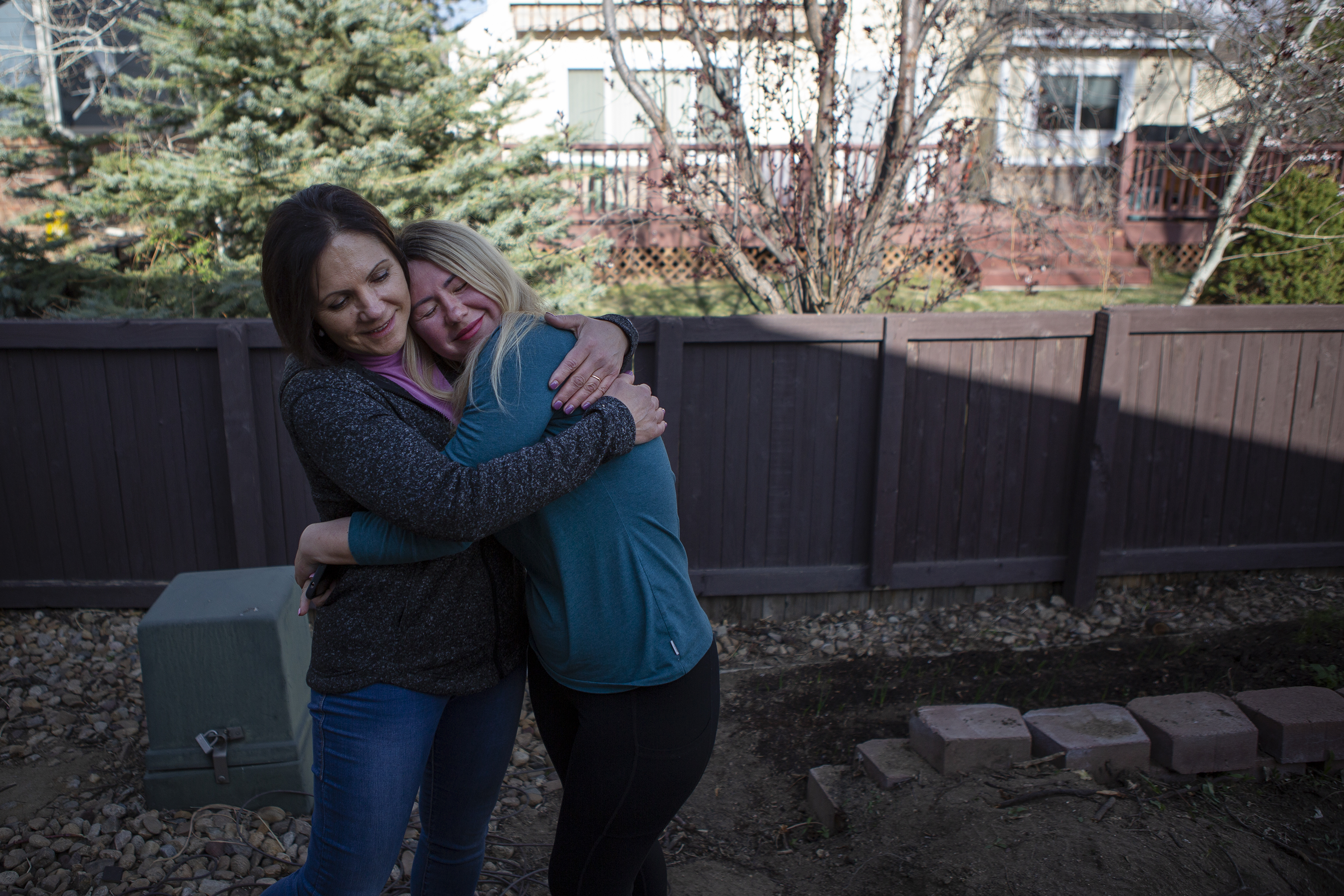
The Ukrainians are coming. In fact some are already here in Colorado, torn between the Rockies and a hard place.
It’s unknown just how many Ukrainians have found shelter in Colorado, but a family that spans generations finds itself in American suburbia a month after they fled the Russian invasion.
There is little hope that Oksana and Adelina Voskresenska and Zina Ryf will leave Broomfield to return to life as it was in Ukraine’s second largest city. Kharkiv is considered one of the country’s most vulnerable metropolitan areas, a talisman for Vladimir Putin, situated on the northeastern corner just 26 miles from the Russian border.
It was just before dawn, Feb. 24, when Oksana and her 10-year-old daughter Adelina woke to explosions which shook the beds and windows of their tiny apartment.
“We didn’t expect this. We tried to understand,” said Oksana, a single mother whose own grandmother, Zina, was in a unit nearby, painfully reliving the bombings she experienced as a child during WWII.
“We called each other and watched TV. It said the war started and we didn’t understand what the reason was.”
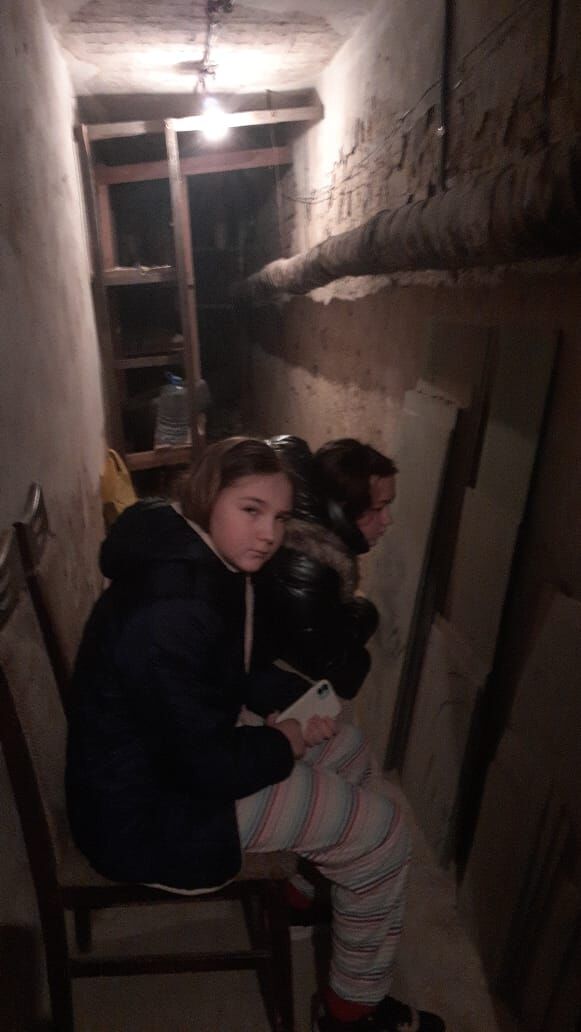
“Momma,” Adelina pointed to her watch and described their experience during the Russian invasion for a reporter.
“She said they spent lots of hours in the basement,” translated Vit Zaissss, her great uncle who along with her great aunt Olga is sponsoring their family. Oksana described leaving Kharkiv in a convoy of four cars so that if one vehicle was bombed, the remaining adults could take care of children who survived.
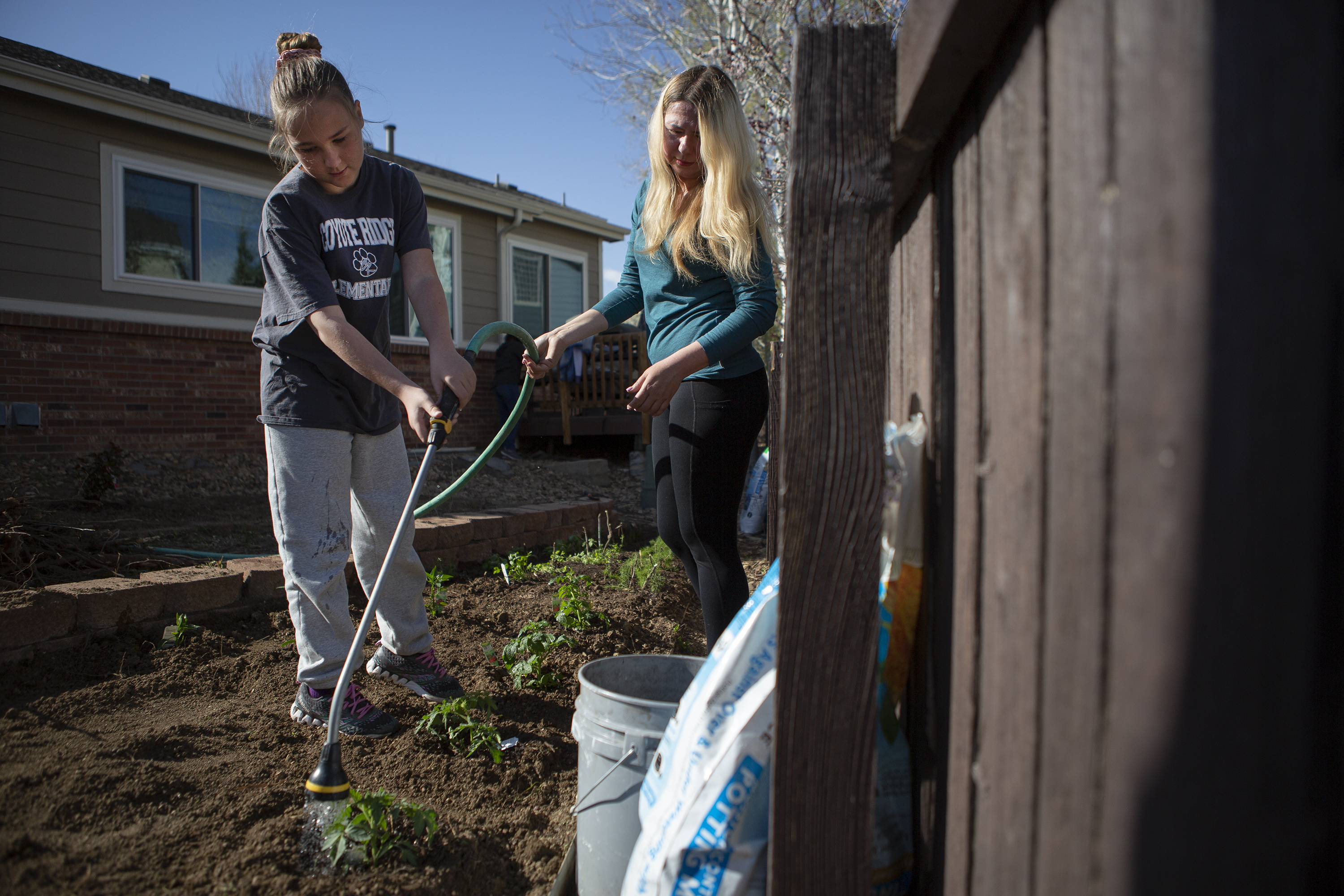
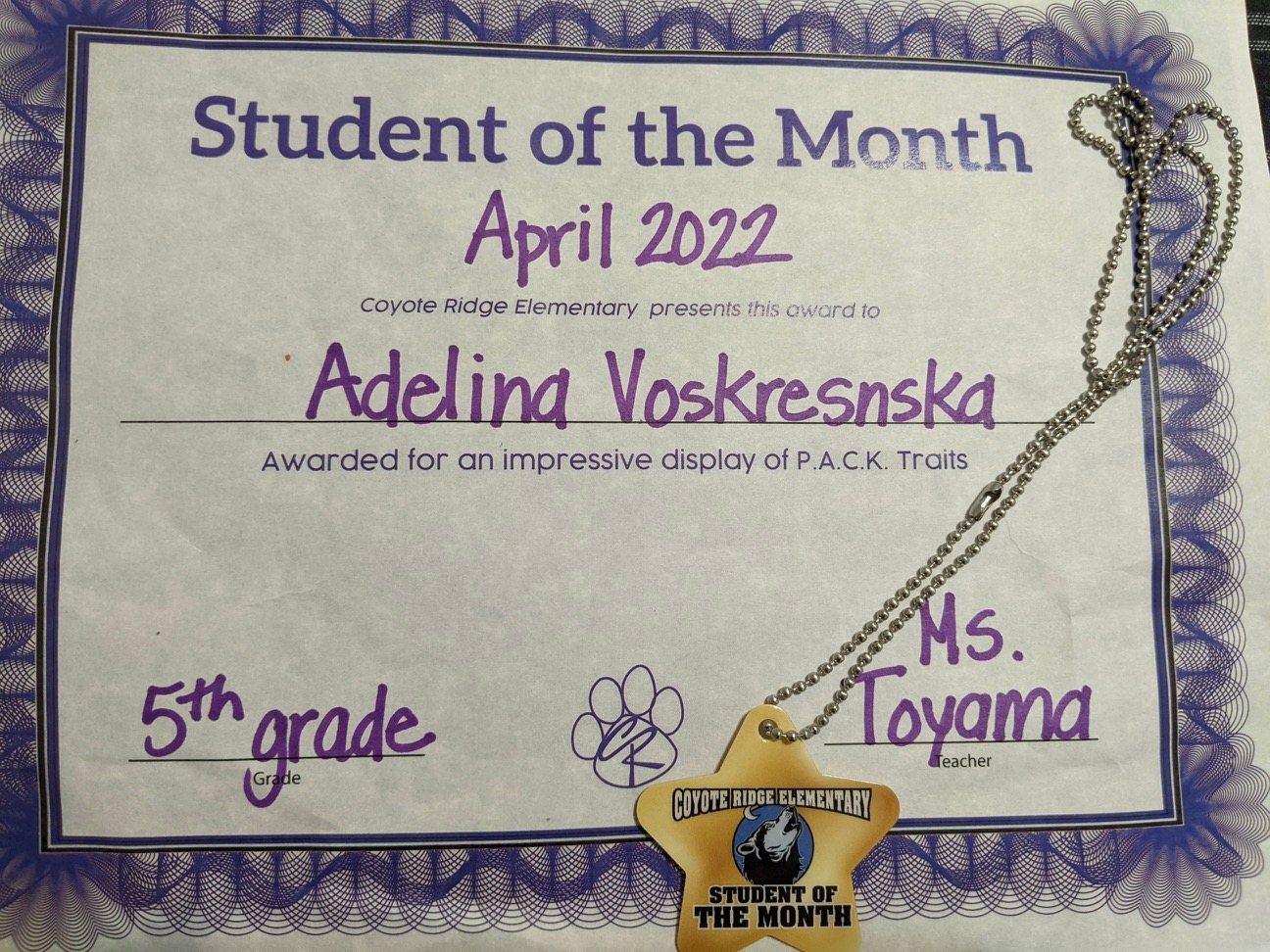
Adelina is wearing a t-shirt which says “Coyote Ridge,” the elementary school where she is acclimating well to new friends through Google translate and sharing chicken nuggets lunches.
Worse than Hitler
All was not well a month ago.
“We thought it was a joke and the Russians would be finished, but it was no joke,” said Oksana, an attorney who got her degree at Yarislav Mudryi National Law University.
She was almost hit when a Russian missile exploded in a bakery parking lot while she was inside buying bread. After weeks of pleading, Oksana’s aunt Olga, terrified that she would lose what was left of her family, issued a ten minute ultimatum over WhatsApp, “I told them ‘Get out! This is not life. You can’t live like this.”
That day, Olga’s mother, Zina, stuffed her medications, some clothes and a gilded wall-hanging of Mary and baby Jesus in a small suitcase and said goodbye. Her family stayed after the Nazis invaded Soviet Ukraine eighty years ago, but this time she felt she had no choice.
“We call Putin “Putler,” she said through Vit. “He is worse than Hitler.”
The 136-hour bolt from Ukraine left 86-year-old Zina grey-faced with exhaustion. “She never wanted to leave. At her age, she would like to finish her life in the place where she lived all her life,” said her son-in-law, Vit Zaiss,. “She’s like a fish out of the water.”
Vit and Olga Zaiss fled Ukraine with their baby boy in the 1990’s and eventually entered the U.S. under political asylum. The mechanical engineers who call America home as U.S. citizens were surprised by the heartache which has bubbled up as they’ve watched their home country resist Vladimir Putin.
An influx of homeless Ukrainians
March 24, leaving Mexico City, Frankfurt, and Poland in their wake, the three women representing three generations of one family joined hundreds of other Ukrainians at the border in Tijuana, Mexico and crossed into San Ysidro, California. For five crazy hours grandma, granddaughter and great-granddaughter were detained by border agents, separated with inoperable cellphones, but saved by the Wifi at a nearby McDonald’s before Vit, who had driven to bring them to their new home, finally found them.
Zina, Oksana and Adelina are three of 3,331 Ukrainians who have crossed into the U.S. through the Southwestern-most border, fleeing the Russian attacks with a grant of Humanitarian Parole. This stipulation means that they can live and work in the United States for up to two years but are not eligible for benefits a refugee would receive.
Another 11-12,000 crossed along other U.S. borders and another 18,000 were in a refugee pipeline which previously resettled religious minorities in former Soviet Republics, which includes Ukrainians. Since the U.S. will take 100,000 Ukrainians, that leaves just under 70,000 spots left for Ukrainians fortunate enough to have sponsors willing to take them in.
As of Monday, an operation called Uniting for Ukraine started its push to welcome Ukrainians on the run for safety and started shutting down their entry through the Mexican border. President Joe Biden announced Friday that Ukrainians will only be able to seek asylum through Europe.
From Kharkiv to Broomfield
Before they enter the United States, Ukrainians must have sponsors who are willing to help their resettlement. Sponsors can be relatives, co-workers or friends who are willing to tackle the complex resettlement process helping immigrants with employment, housing and medical care. The Broomfield Three are sponsored by Vit and Olga, their $5,000 flights financed by the couple’s son’s California employer, Verkada. A GoFundMe has raised two thousand dollars which will help pay for various required visas. Only Adelina, through Health First Colorado, has free medical care and her schooling at Coyote Ridge is free.
Oksana and Zina are not eligible for Medicaid under Humanitarian Parole (HP) status.
“They have nothing. Zero,” said Olga. Immigrants under HP do not receive refugee status, which includes a pathway to citizenship, work authorization and access to safety net programs, a situation which has left the family feeling even more desperate.
Unsure of their financial situation, Oksana is moving ahead with plans for a drivers license, and is also applying for Employment Authorization and Temporary Protective status. She has her law degree but she just wants a job and, somehow, a new start.
Even immigration attorneys are in a holding pattern as they have little advise for confused Ukrainians, both in Colorado and overseas, calling them for guidance.
“They really should be able to get a job and get health care. There’s a strong case for asylum because the Russians are seeking to discriminate against them and commit these war crimes,” said Harry Hollithron. He told The Denver Gazette that rhetoric from politicians is a warm, fuzzy with little substance to explain what’s really going on with the process.
“We are all very confused unfortunately. Hey, we want to help Ukraine but there are no actual details.”
What’s next?
Just as he did during the Afghan war, Governor Polis made it clear early on that Colorado would welcome fleeing Ukrainians, but so far the state has only recommended outside resources. Madlynn Ruble, Deputy Director of Communications for Colorado’s Department of Health and Human Services, said that the state won’t act until the federal government starts the pipeline for undocumented Ukrainians.
“Colorado will welcome refugees when the United States Refugee Admissions Program (USRAP) assigns Ukrainians to Colorado. Since DHS manages federal immigration, we don’t know when Ukrainians sponsored for Humanitarian Parole through this program will arrive,” Ruble told The Gazette.
Polis’ spokesman Conor Cahill told The Gazette that the governor’s office supports President Biden’s plan to welcome and support Ukrainians seeking safety and that it “looks forward to reviewing the updated policies from the White House.”
The Humanitarian Parole status has been criticized by human rights groups as being a temporary fix for a long term problem.
“It is not a panacea,” said Melanie Nezer, the Hebrew International Aid Society’s senior vice president for global public affairs, though she remarked that it has been good for bringing families together.
Hollithron agrees, noting that refugee settlement organizations are already overwhelmed with refugees, but he is encouraged to see that the wheels are turning in the U.S. for Ukrainians. “To see how it’s implemented is a different story,” he said.
Comfort food
Zina, who her daughter says has always been a social person, cleans and cooks to keep her mind off of the war. She makes Ukrainian Borscht and cabbage rolls with ground beef and even toiled over a home-made 15 layer Napoleon pastry for Olga’s birthday. “She refuses to learn English,” whispers Olga, chuckling. Perhaps her private rebellion is born of a stubborn wish for home. She says she cries when she imagines the graves of her parents, husband, sister and son left unattended. The recent positive news is that the reports and photos out of Kharkiv indicate that the family’s apartment complex is still standing.
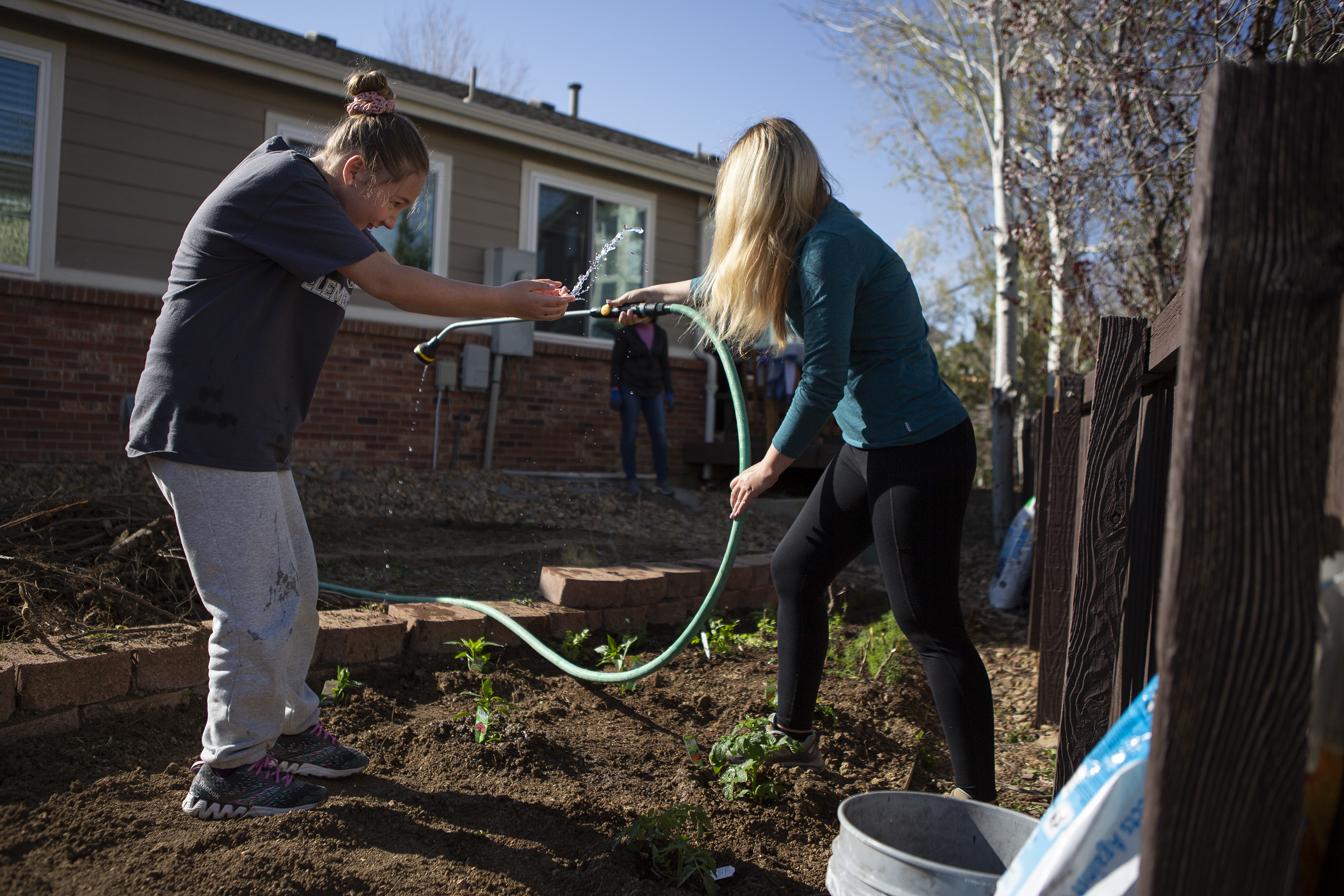
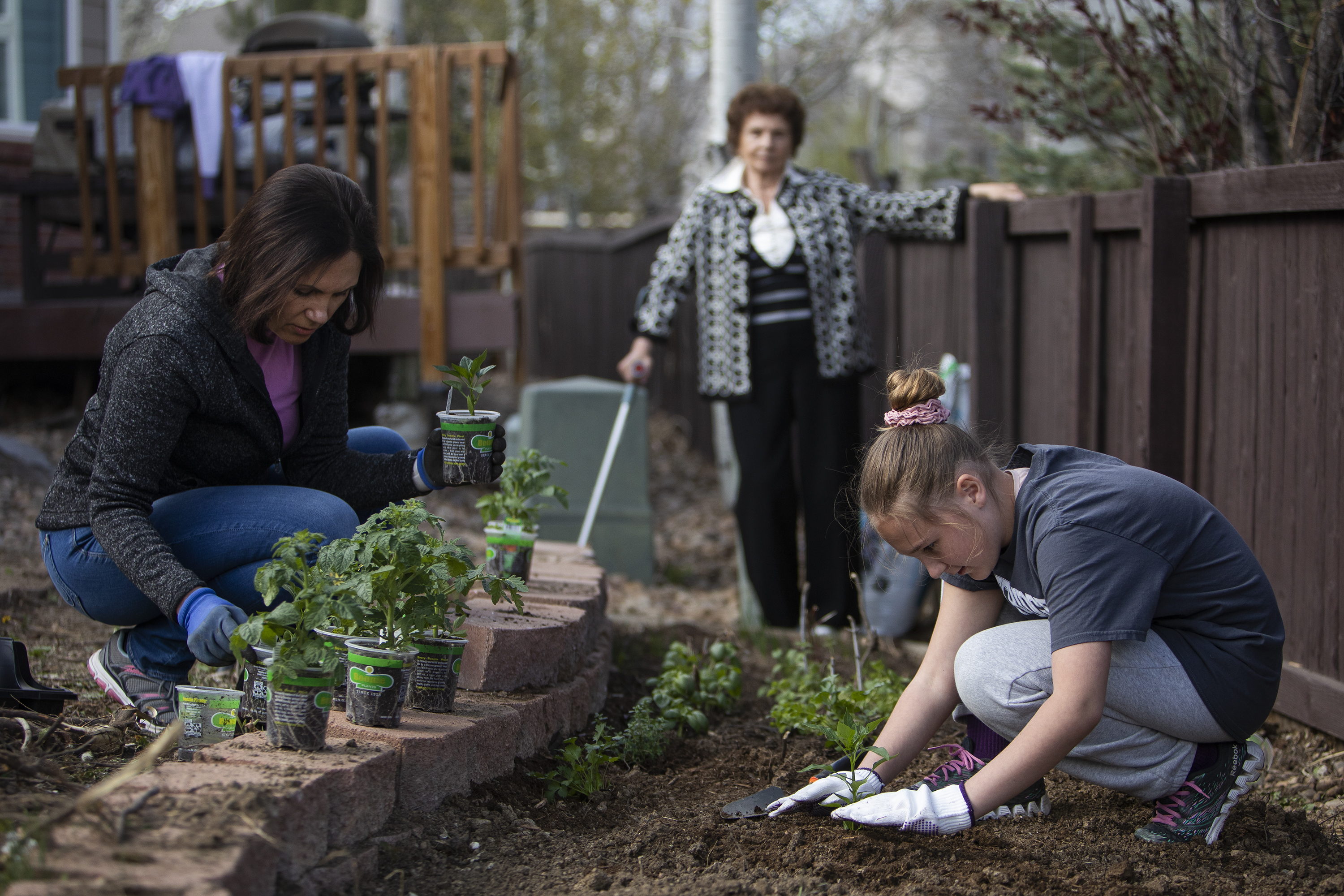
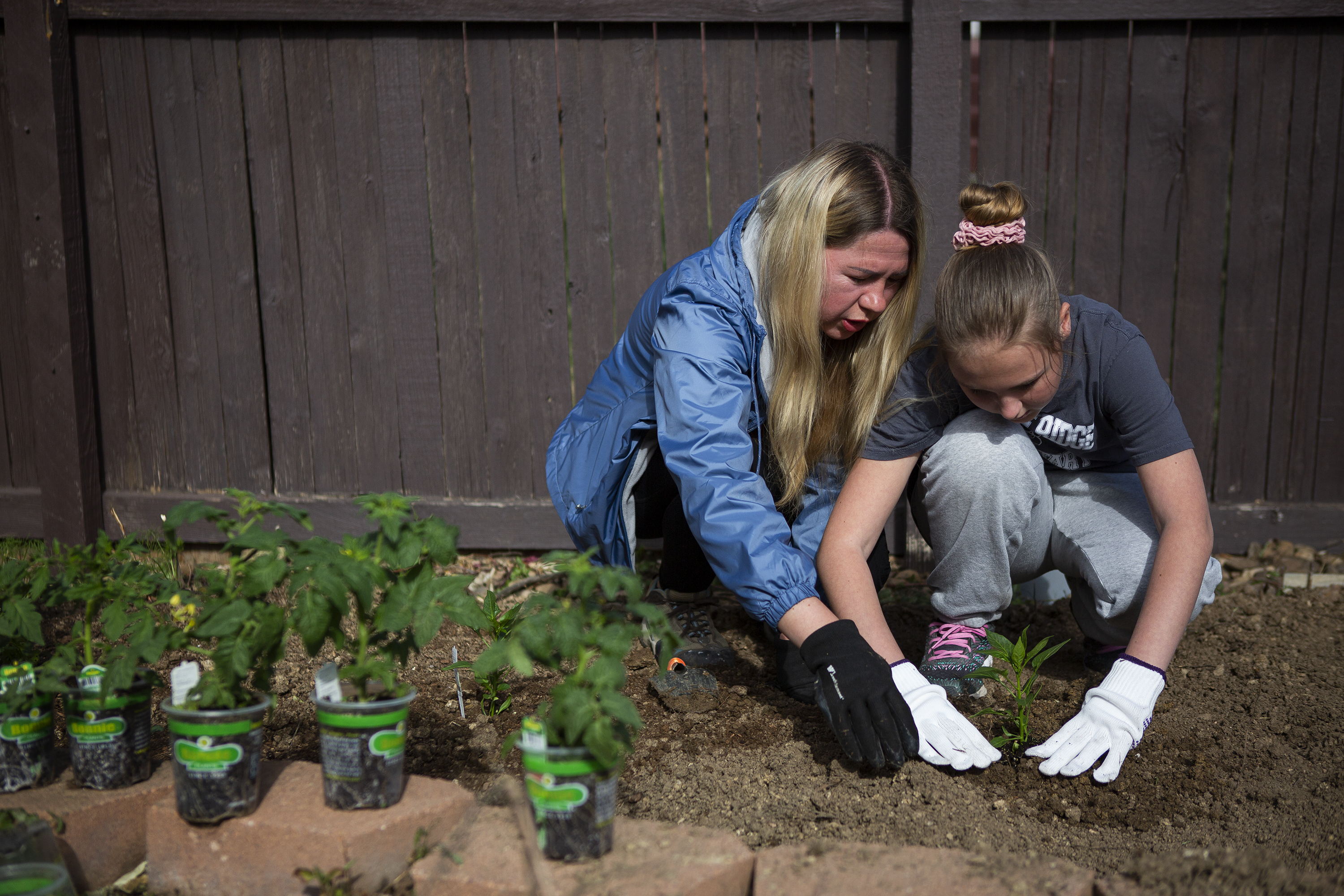
This week, four generations celebrated renewal in two ways: Sunday was Orthodox Easter Day, and Monday, they planted Adelina’s favorite cucumbers and green onions out back: establishing roots by the uprooted. Said Vit, “We are just hoping for the dream.”
If you’d like to help, GoFundMe can be found here:
https://www.gofundme.com/f/cgcuer-ukrainian-family?qid=f56463af190755ffc7fa956109a70337