







Friday Faceoff: Should MLB tweak playoff format after top teams eliminated early?
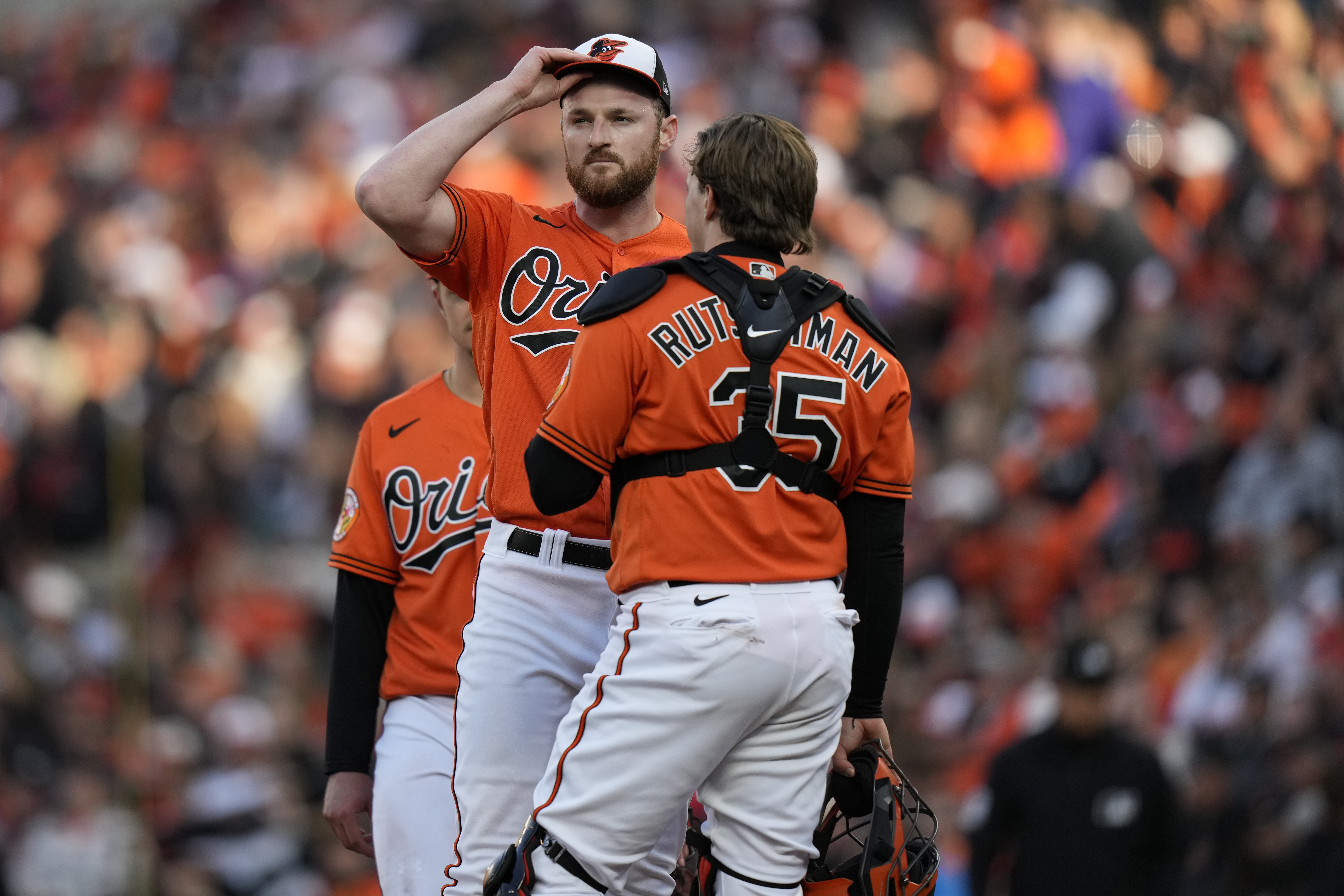
As the MLB playoffs have reached the League Championship round, only one division winner remains — the Houston Astros.
With the sport’s top teams already eliminated from the playoffs, our Luke Zahlmann and Tyler King debate whether or not the league’s current postseason format needs to be changed.
Luke Zahlmann, Rockies beat writer
Answer: Yes
Major League Baseball’s playoff format is hurting its best teams, and a tweak to the rules that were already changed two years ago is needed.
The format was made to ensure more baseball would be played, both with an additional team making the field and a shift away from the single-game wild card scenarios that played out in 2019 and 2021. It is a change that is causing problems but reversing it back to a one-game wild card is the solution.
Last year’s playoff first round would not have gone any different if it was a one-game playoff, instead of a best-of-three wild card series. This year? The same teams also would have made it past the first round — every team that has won the first game of a three-game series in the new wild card format has advanced.
Reversing the change would not have taken rightful playoff series wins away from teams, but it would give higher seeds a fairer shake.
As it stands, there is essentially no reward for achieving a top seed in MLB.
The first-round bye and an additional home game benefit a team achieving division supremacy with one of their respective league’s two best records. The downside, of course, is that first-round teams are forced to stay home while other teams continue their grooves, similar to how the Philadelphia Phillies have downed the Atlanta Braves in back-to-back postseasons.
This year’s Braves team appeared especially positioned to go deep after posting arguably the best offensive season in the league’s history. In four games against the Phillies, they scored just 10 combined runs. In the regular season, they averaged nearly six a game. Atlanta hit just .186 as a team after achieving a .276 average across the regular season’s 162-game slate.
The Phillies may have won anyway. The Los Angeles Dodgers may have still been upset by Arizona and the American League-best Baltimore Orioles may have gone down in a sweep, regardless of format. If the playoffs were set to a one-game wild card this year, instead of a best-of-three series, the division series would have been able to start Wednesday or Thursday, rather than Saturday of the first week of October.
The higher seeds would still have additional rest as a benefit, but it would be for three or four days after the season, rather than a full week. Catching back up to major-league pitching and timing would be a much easier task, even with the small change.
Tyler King, college sports reporter
Answer: No
Look, I’m sure there are some baseball purists that believe the baseball postseason should be like it was in the old days — the winner of the National League and the winner of the American League meet in the World Series. That’s it.
But this is the 21st century where TV deals and advertisements dominate the sports world.
Maybe that is ultimately the best way to determine an overall champion after a 162-game season, but that reality is never returning. As the MLB has tried to strike a balance between making the postseason more interesting and not diluting the importance of the regular season, the format they have now has done a good job of that.
A bye into the division series and a few days of rest is more than enough of a reward for the top two teams in each league and even for the other division winner and top wild card team, they still have home field advantage for all three games of the wild card round.
It’s not the postseason format’s fault that the Braves, Orioles, Dodgers and Rays — the only four teams to win 99 games or more in the regular season — were all eliminated in the first two rounds. Just look at each team individually.
Atlanta ran into a playoff buzz saw in Philadelphia, a team perfectly built for the postseason with its deep lineup capable of slugging home runs at will, a pair of aces in the rotation and a solid bullpen with several high velocity relievers.

Still, the Braves had the pitching advantage in two of the four games against the Phillies but still managed to lose both games started by strikeout king Spencer Strider after their historic offense recorded a total of three runs in their three losses in the series.
As for the Orioles and Dodgers, is it really all that surprising that either team lost? Baltimore surprised a lot of people as its core of young players produced a dynamic lineup, but the front office failed to properly address the team’s pitching situation at the trade deadline and the team imploded in the playoffs.
Same goes for L.A., who entered the postseason with as uncertain a pitching situation as any team. After Clayton Kershaw failed to record an out in Game 1 against the Diamondbacks, the team simply had no chance the rest of the way.
The lesson of this postseason should not be that the format needs to be changed yet again. It’s that teams still have not realized that regular season baseball and postseason baseball remain wildly different, and teams need to build around that fact.
