







Mark Kiszla: Why were Michael Malone and Calvin Booth fired? Their bad relationship was wasting Nikola Jokic’s generational talent.
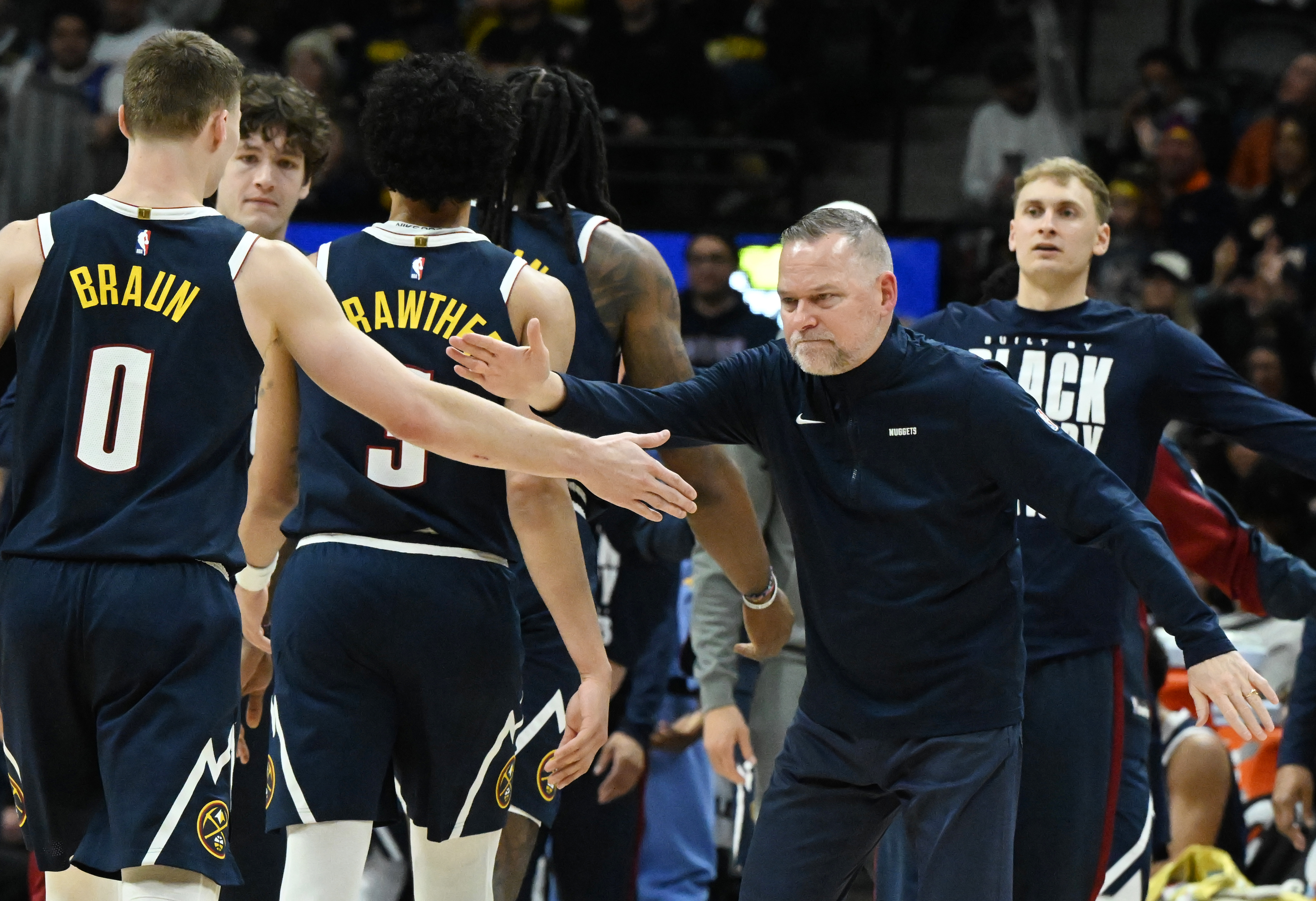
Nuggets coach Michael Malone and general manager Calvin Booth were awkwardly bound by a shiny championship ring that squeezed them uncomfortably together like a steel vise.
So maybe the real shock is not that Malone and Booth were unceremoniously dismissed Tuesday with the NBA playoffs only 11 days away, but that Nuggets ownership waited so long to end a dysfunctional relationship guilty of wasting the prime of center Nikola Jokic’s career.
“I hate losing,” Malone said Sunday, after a wretched home loss to Indiana that proved to be the last of his decade stint on the Denver bench. “And it’s driving me crazy.”
A mere 663 days after Malone shared his ambition to make the Nuggets a dynasty with a cheering throng in downtown Denver after the first championship in franchise history, he was canned by franchise owners Stan and Josh Kroenke with only three games remaining on the regular-season schedule.
Was the move shocking, disrespectful and desperate?
Absolutely.
The Kroenkes sent a cold, no-nonsense message not only to their coach and general manager, but to players like guard Jamal Murray and forward Michael Porter Jr., whose production has fallen far short of the more than $400 million that ownership invested in the two of them.
But was this decision to move on from the long-broken relationship between Malone and Booth surprising?
Not so much.
It was painfully overdue.
Way back in April 2023, on the eve of the Nuggets’ dominant run to a championship that began against arch-rival Minnesota and ended against upstart Miami, I wrote it was put up or shut up time for Malone.
At the time, the coach acknowledged pressure from within the organization to win a championship. It was my distinct understanding that if the Nuggets had stumbled against the Timberwolves in the opening round, Booth would’ve dismissed Malone.
But what happened instead? Eight weeks and 16 victories, created by pure Jokic magic that put the Nuggets on parade and saved a shaky relationship between a first-year general manager and a feisty coach he didn’t hire.
Rather than solidify their mutual respect, the championship seemed to entrench Malone and Booth in their own strong and often at-odds views about how best to leverage Jokic’s generational talent.
While the harsh salary-cap realities of NBA economics forced the Nuggets to say goodbye to defensive wizards Bruce Brown and Kentavious Caldwell-Pope in successive years, Malone never totally embraced Booth’s vision of developing youngsters like Peyton Watson and Jalen Pickett.
While it was a crying shame when the Nuggets blew a 20-point lead during the second half to lose Game 7 at Ball Arena and get bounced by Minnesota from last year’s playoffs, a much bigger festering problem could be found buried deeper in the statistics from that series.
Malone relied on Justin Holiday and Reggie Jackson, two veterans with no future in Denver, against the Timberwolves, playing them a total of 180 minutes. Meanwhile, Watson and Pickett gathered dust on the Denver bench, combining to see only 40 minutes of court time in the series.
As much as I admire and respect Malone, it was an example of stubbornness that prevents him from seeking new answers to lingering team problems.
Yes, we all realize tension between the win-now focus of a coach and long-term developmental concerns of a general manager is nothing new in the NBA.
Malone and Booth, however, seldom were in the same book, much less on the same page, to share the respect necessary for their mutual growth.
There’s one image from the excruciating 140-139 home loss on April 1 to those same pesky Timberwolves that effectively choked what little optimism remained for these Nuggets that perfectly illustrates the irreconcilable differences between Booth and Malone.
As hyperactive veteran Russell Westbrook is hurtling toward a missed layup he doesn’t have to take in the final 10 seconds before the final buzzer, young point guard Pickett can be seen standing on the Nuggets bench with palms down, apparently motioning to slow down the basketball and force the T-wolves to foul.
Long before the four-game losing streak that ended a tenure that saw Malone win 515 regular-season and playoff games, the vibe of his current team frayed with issues as obvious as a decreased player commitment to playing defense and increased frustration on the Jokic’s face.
With one of the greatest individual seasons in league history, Jokic masked the systemic, irreversible rot to the pillars of this team’s success.
Back on March 26, when Jokic scored 39 points against Milwaukee with yet another triple-double, Josh Kroenke hobbled with his shoe untied on a painfully injured foot into the victorious Denver locker room.
“Maybe the most painful thing I’ve ever had in my life,” the 44-year-old president of the Nuggets told me. Kroenke then excused himself to have a private chat with Jokic in the hallway leading to Malone’s office.
My point in sharing that scene? The decision to release Malone from duty and not to renew Booth’s contract was not made in haste. For weeks, Nuggets ownership has been studying how to attack a basketball team that too often looks both disconnected and disinterested.
“After talking with my father in recent days,” Kroenke told Vic Lombardi during a brief interview posted on the Nuggets’ social media channels, “we came to the decision we were going to be changing these roles at the end of the season.”
Whether Malone or Booth knew it or not, they were dead men walking in their roles with the Nuggets.
So was it rude, crude and disrespectful to fire the coach and general manager who brought a championship to a Denver franchise that had been chasing the big trophy since way back in 1967?
Absolutely.
But oddly, this Black Tuesday in Nuggets history could also be considered an act of mercy.
It would have been cruel to prolong the agony between Malone and Booth even one more day.