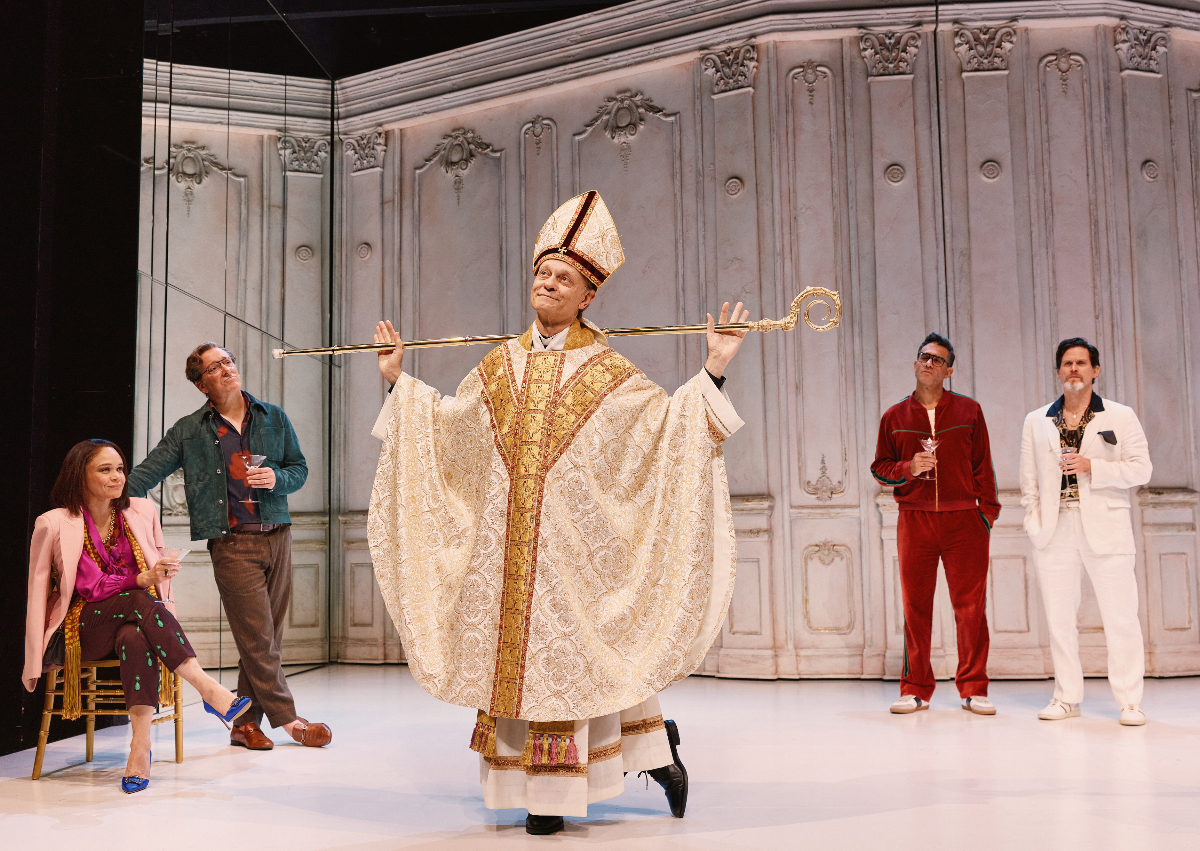
Denver-bound actor David Hyde Pierce on importance of live theater
JOHN MOORE


It happened after seeing a powerful play by a small Denver theater company in 2009. It was the story of an elderly Black woman who had been sexually abused by her evangelical father throughout her childhood – and no one did anything to stop it.
At the talkback following the performance, another Black woman rose to speak softly through her tears. With her head bowed, she whispered her confession to the hushed crowd: “For the first time, I know how my daughters feel.”
In that moment, we all knew this family’s entire story. And we collectively prayed this was the first step toward a reconciliation decades in the making – one made possible by the play we had just experienced together.
That’s why theater matters.
Years before, when I was teaching theater at a Denver high school, an overmatched counselor asked my advice about a student who had run away from home and a mother who had all but given up on her. I handed her two tickets to attend the play we were staging. It was about a high school much like our own – one with some frustrated teachers, cynical students, detached parents (and a gun).
After the lingering opening-night crowd finally made its way out, the stage manager pointed me toward that same mother and daughter, still seated in the theater. They were crying, hugging and, most important, talking things out. “Should I tell them to leave?” I was asked.
“Nope,” I said. “Whatever is happening in there needs to take as much time as it needs to take.” They eventually left – together.
That’s why theater matters.
In 2004, David Hyde Pierce was in Chicago performing in the pre-Broadway run of Monty Python’s “Spamalot.” (He was Sir Robin.) “Audiences were going nuts, and we were all so happy,” he told me.
After one matinee performance, Pierce and castmate Hank Azaria were walking down the street together when they were stopped by a couple who told them their son had committed suicide a few years before. Just the night before, they had attended “Spamalot,” and it was their first real night out since his death. They told the actors: “That was the first time we’ve done anything like that – and it is the first time we have laughed in years.”
That’s why theater matters.
Pierce is the Emmy and Tony-Award winning actor best known to TV audiences as Niles Crane on “Frasier” and to theater fans as Lieutenant Frank Cioffi in “Curtains.”
“That was a real lesson to me – and I’ll tell you the TV parallel of that story are all those people who have told me that watching ‘Frasier’ helped them get through COVID, or tough times, or a terrible loss,” he said. “I don’t think any of us put that show together thinking we were saving the world. But obviously there’s a real need that stories fill.”
Pierce will be in Denver on Saturday for a 4 p.m. public conversation at the Mizel Arts and Culture Center on the subject of, yes, “Why Theatre Matters Today.”
That extra word – “today” – gives the topic a timely kick. Theaters are struggling to bring audiences back at pre-pandemic attendance levels while also exploring new outdoor, ambulant ways of telling stories that capture the fancy of today’s fractured and fickle audiences.
“I do feel like these things go in cycles, and when the cycle is particularly tough, like it is now, it can be hard to imagine that things will ever swing the other way,” he said. “In many ways, I think journalism and live theater are in the same boat. I don’t think we as a people have drifted from the need for real people to connect with real people but, for reasons both good and bad, we seem to be more isolated from each other than ever right now.”

Falling headlong into theater
Theater mattered to David Hyde Pierce “before I even realized it,” he said. One giveaway: Stumbling upon a collection of five Shakespeare plays and being completely fascinated by it – while just a middle-schooler in Saratoga, N.Y.
Credit the allure of Julius Caesar’s bloody death. “I ended up staging that play twice during elementary school with my friends,” he said. “I would always get to play Caesar and get stabbed and fall down.”
And, speaking of falling down: “Every day when I came downstairs for breakfast as a small boy, I would pretend to get shot at the top of the staircase and fall all the way down.
“At the time, I didn’t recognize all of that was heading anywhere except for downstairs.”
In his teens, Pierce went to a summer camp in New Hampshire called Kabeyun, where the kids put on an annual Gilbert and Sullivan show – and Pierce eventually started directing them. Fast forward to Yale University, where he was not yet planning to become involved in theater in any serious way. “But karma reeled me in,” he said.
“I was in this suite with two sets of bedrooms and a central living room,” he said. “In one room were three theater majors and a jock – and in the other were three jocks and me. After about one day, we all said, ‘You know, we might be able to fix this problem.’ So the jock and I switched places, and now I was surrounded by these theater people – and I ended up doing it for fun.”
Before long, he said, “I just felt like I was home in the theater.”
It turns out that acting was “in the blood somehow,” said Pierce, who didn’t learn that his own father had been a bit of an actor himself until young David went to work at George Pierce’s mom-and-pop insurance agency as a teen.
“Turns out, my dad had done some community theater just because he thought it was fun. He wanted to go to New York to be an actor right after he got out of college,” said Pierce. But the Great Depression, World War II and other life responsibilities conspired against George pursuing that dream.
“When I was doing ‘Curtains’ on Broadway (in 2007), a group from my hometown came, and they brought me a present,” he said. “They gave me Xerox copies of all my dad’s reviews from when he was doing theater back in the 1940s and ‘50s. Apparently, he was really funny, and kind of loopy, and people loved him.”

Pierce made his Broadway debut in a landmark 1982 production of “Beyond Therapy,” written by the master of comic absurdity, Christopher Durang, who died April 2. His castmates included Dianne Wiest and John Lithgow. “I can’t believe he’s gone,” Pierce said, “and I can’t believe how lucky we are to have had him in the theater.”
In 2022, Pierce played Julia Child’s husband, Paul, in the Max series “Julia,” about the famous chef and her transformative cooking show. In 2023, he starred in the world-premiere of Stephen Sondheim’s final musical, “Here We Are.”
And now he’s coming full circle with W.S. Gilbert and Sir Arthur Sullivan. He’ll be playing Major General Stanley in “The Pirates of Penzance,” opening April 24 on Broadway.
“This is a dream come true,” he said. “It’s not something I would have expected. When I did all that Gilbert and Sullivan as a young person, it was just for fun, and the idea that I get to play such a great role now alongside a lot of my friends, yeah – I can’t wait.”
A question of great matter
Pierce is coming to Denver because of a real connection he made with a real person 40 years ago. In the mid-1970s, Pierce and Denver’s Jennifer McCray Rincón were undergraduate classmates in Yale’s Theatre Studies program. Rincón now heads Denver’s Visionbox Studio, which she founded in 2010 with Bill Pullman (yes, President Whitmore in “Independence Day”) to provide student and professional actors with graduate-level training.
Rincón and Pierce worked college summers together at the Williamstown (Mass.) Theatre Festival learning at the foot of the legendary Nikos Psacharopoulos, who had started his first theater troupe at age 15 in Nazi-occupied Greece and went on to become considered perhaps the greatest director of Anton Chekhov in the world.
“We connected because of Nikos,” said Pierce. “That was a very different kind of summer theater company. We weren’t there to do ‘The Music Man.’ We were there to do Chekhov and Aeschylus and Tennessee Williams. It was a place where both Jennifer and I got exposed to the best people in the business.”
And now Pierce is Denver-bound to publicly tackle that epic, loaded question of why theater matters today.
“I’m actually approaching the question as more, ‘Does theater matter?’ And particularly for these students, ‘Does training matter?’” said Pierce, who will be joined in a group discussion by Rincón, two Visionbox students and the audience.
That provocation bears exploration because of one growing reality in today’s entertainment landscape. Visionbox trains actual actors and sends them off into a world of TV and film where the deciding factor in casting a trained actor versus a YouTube personality might very well come down to who has more Instagram followers. (Not training.)
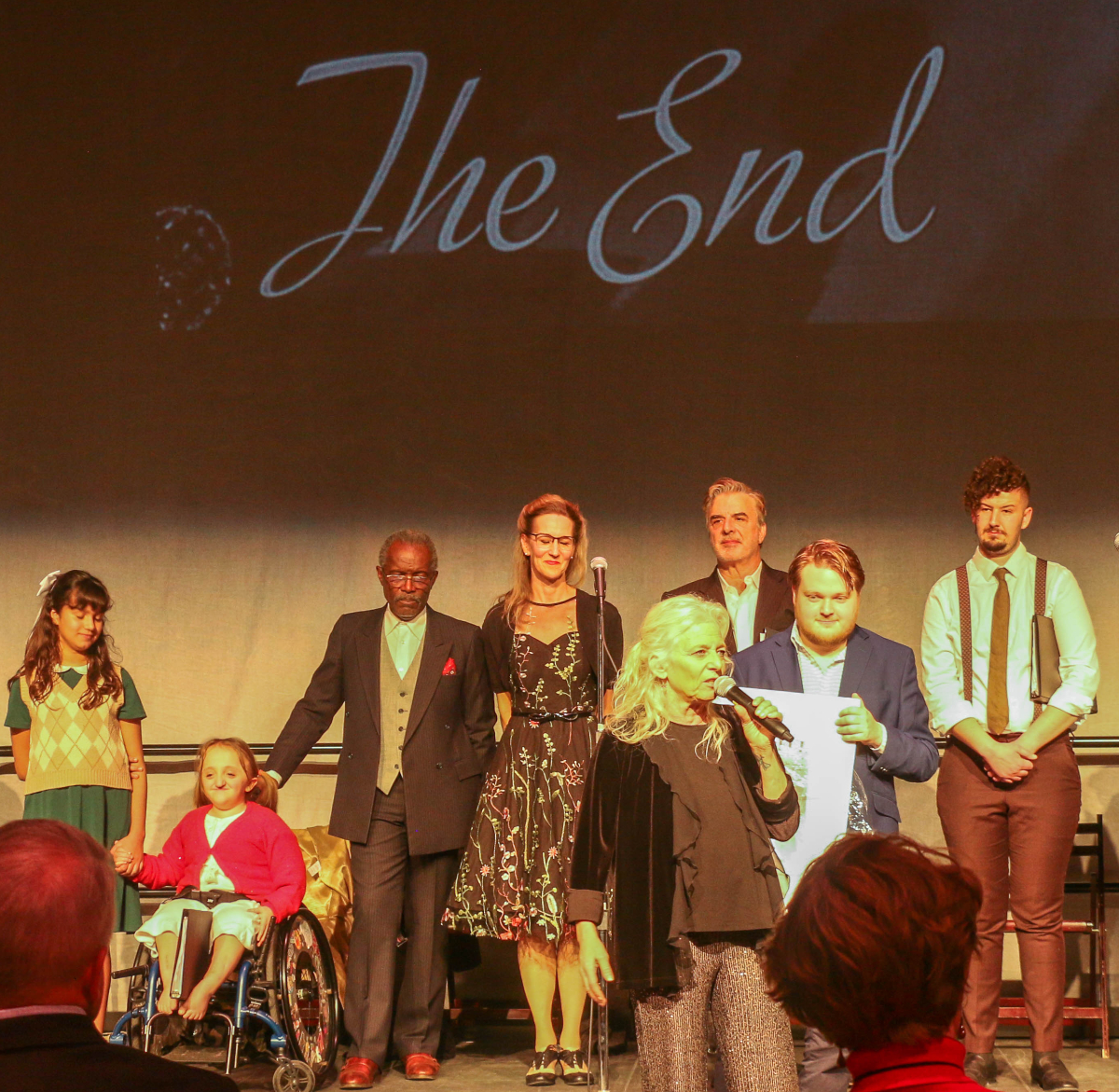
“I will tell you, I think it’s so valuable what Jennifer is doing with Visionbox,” Pierce said. “Because at the core of the very specific kind of training that she and I were both brought up on is finding the truth in the writing, finding the truth of the characters, and finding the truth of the play so you can pass that truth on to the audience. As the Bible says, ‘the truth will set you free.’ And when what we do in the theater is true, it sets people free.”
As for live theater’s once and future relevance – and its place inside, outside in a park or on street corners like days of yore, Pierce is open to all of it. “I think anything is possible – and that anything should be possible,” he said. “But the thing that should determine where the story is performed is the piece being done.
“When we did Stephen Sondheim’s last musical last year, it was inspired by these two crazy Luis Buñuel films. It was a wild and crazy thing, and we did it in this brand new theater space called The Shed. It was just a giant open space where the designers were able to completely create what the stage was going to be. Not only did it work gangbusters, but, had we done it on a proscenium stage in one of the great Broadway houses, I don’t know that it would have worked.
“I think when you have the precedent of Shakespeare originally being done in an open-air theater, when someone says, ‘Well, let’s do it in a field,’ then, yes, do it in a field. That’s great.
“I think that’s the reason theater isn’t dead. And I don’t anticipate it dying anytime soon because I think there will always be someone with a new idea or a new way of doing something.
“I had a great, wonderful Romanian director at the Guthrie Theater named Liviu Ciulei, who always said: ‘Originality is simply a lack of information.’”