Denver mayor’s push to revitalize downtown runs into difficult realities on the ground
The Johnston administration's strategies for a "vibrant" downtown are colliding with practical and bureaucratic realities
Editor’s note: This is the first in a four-part series looking into Mayor Mike Johnston’s priorities for 2024. This installment focuses on the mayor’s goal of “revitalizing” downtown Denver. Read about the mayor’s campaign to increase the affordable housing inventory, reduce violent crime and tackle homelessness. You can also find the series here.
The debate swirling around converting empty offices into housing — a key component of Mayor Mike Johnston’s push to inject renewed life into downtown Denver — falls into two camps: It is either the area’s saving grace or it’s not worth the effort.
Denver’s Venture Architecture founder Martin Goldstein said he falls in the middle.
“It’s not the panacea. It’s also not proven that it doesn’t work,” Goldstein said. “It’s just hard.”
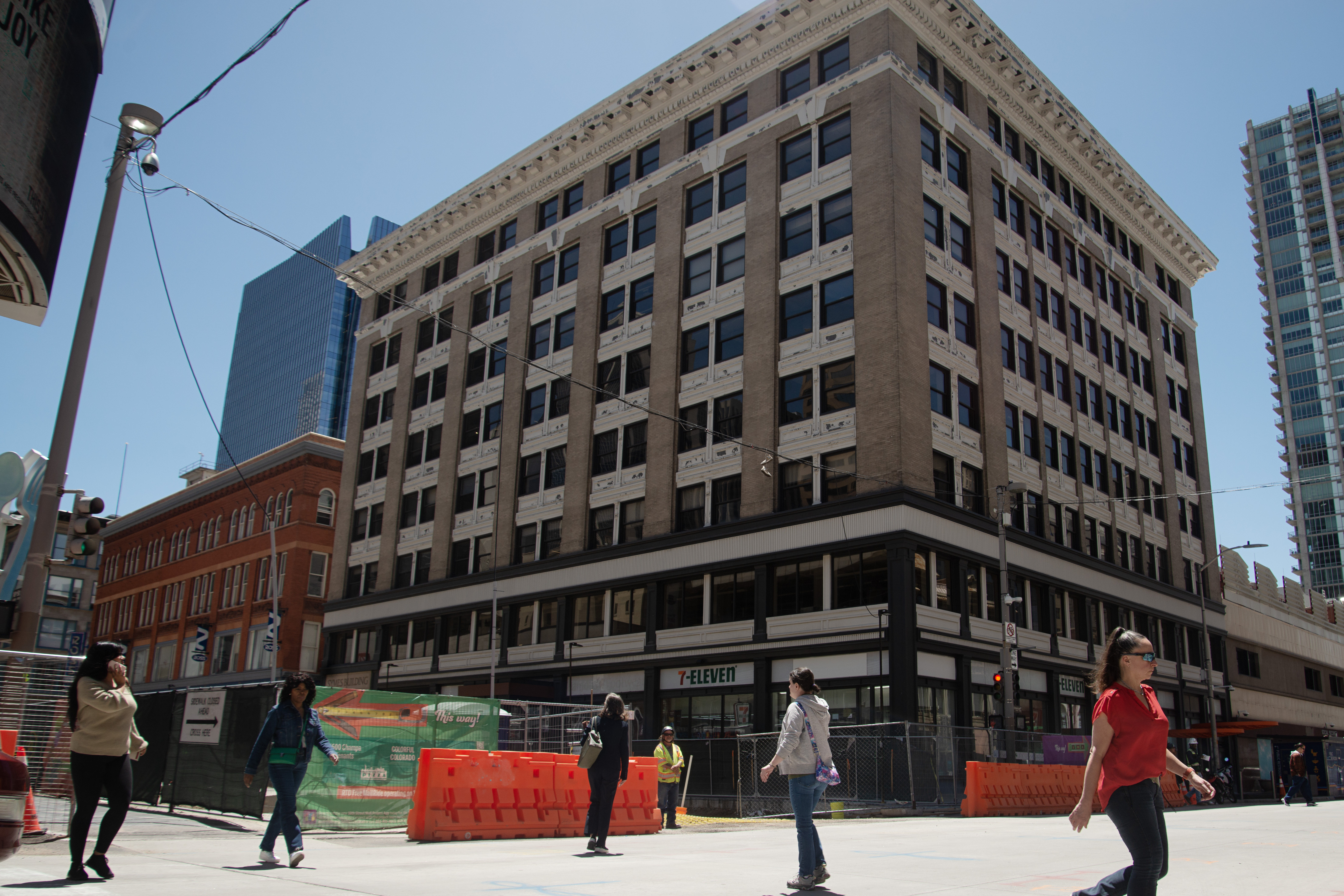
Goldstein’s firm has been working to convert an eight-story office building, known as the “The George,” which was constructed in 1906 along 16th Street Mall. But the project hit several roadblocks after his team learned a sidewalk installed a few years ago had the wrong slope, the foundation of the building was past the property line and the roof overhang was out even further.
“We can’t chop it off,” Goldstein said.
While not all those issues have to be fixed, he said, they need to be thoroughly documented.
It’s much easier to build new housing from an empty plot of land, the developer said. But working with the old office building, “it’s had a history that needs to be untangled.”
Adaptive reuse?
City officials and others have touted “adaptive reuse” — the idea of converting an existing building into something other than what it was originally built for — as a solution to downtown’s office vacancy and housing shortage woes.
But convincing developers to take the leap has been a major challenge for Johnston, who came into power last year promising to solve many of Denver’s pressing challenges.
In the case of The George, Goldstein is running into both the practicality of converting the building, as well as into potential regulatory hurdles.
From homelessness to housing to public safety to economic vitality, the Johnston administration has shown a proclivity for announcing ambitious ideas that might take too long to bear fruit, partly because of bureaucratic roadblocks, as the window to save downtown — according to some observers — is fast narrowing.
Adaptive reuse is one of the strategies put forth by the mayor to revitalize downtown Denver after it was hit hard by the COVID-19 pandemic, when office workers retreated home to work remotely, gathering places like restaurants and theaters closed and homeless encampments filled empty streets.
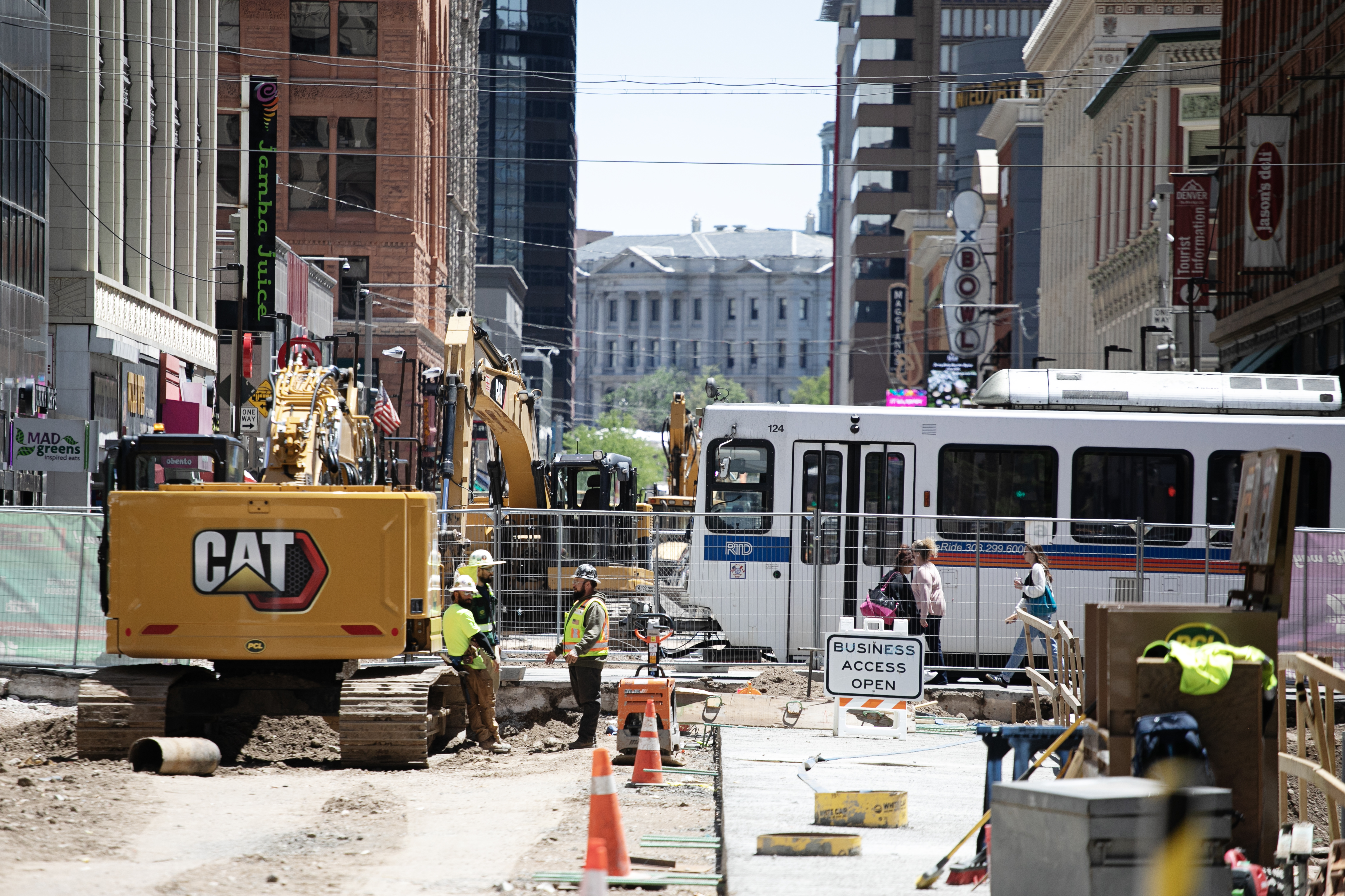
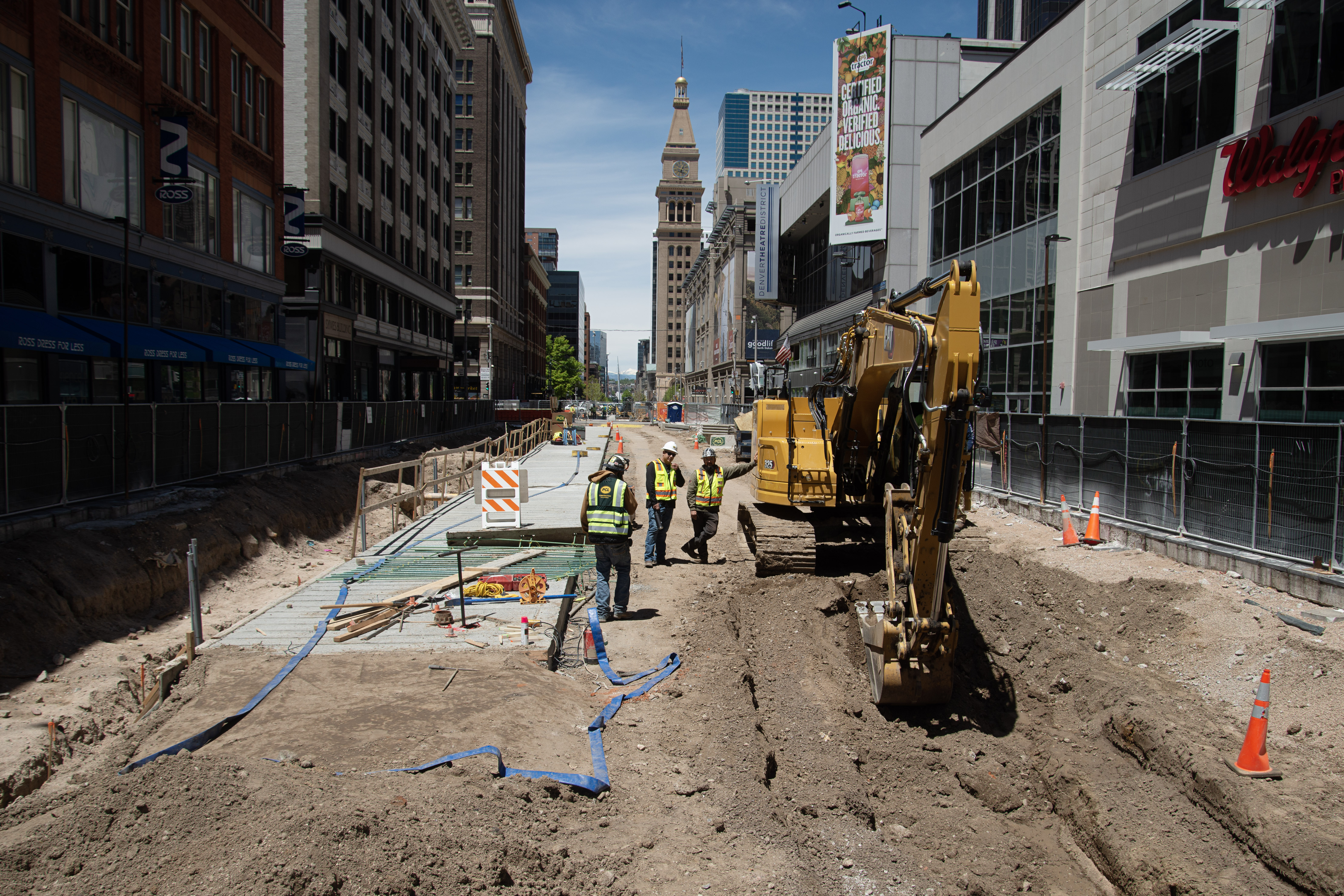
And major construction on one of the city’s biggest attractions, 16th Street Mall, hasn’t helped to convince people to return.
The Johnston administration is allocating significant amounts of taxpayers’ money to fund his priorities.
Earlier this year, Johnston urged a crowd of more than 100 local real estate professionals to help him change the narrative about downtown.
He committed to spend $58 million this year on revitalizing downtown with a significant emphasis on getting homeless people out of downtown’s streets and into housing.
During his opening speech at the annual University of Colorado Real Estate Forum hosted at the Denver Performing Arts Center in March, the mayor insisted that downtown is changing, notably by shutting down homeless encampments. He asked realtors, developers and investors to be “ambassadors for the city.”
“This is the moment that you should tell people about that. Because we are going to do everything we can to build the environment that’s going to be vibrant,” he said. “But we need people to know and to come back.”
Of Johnston’s goals for 2024, building a “vibrant Denver,” especially in downtown, sits atop that list.
His other priorities include improving public safety, creating more affordable housing, addressing homelessness and an inefficient city government — many of which, he said, are contributing to the city center’s “doom loop.”
Johnston envisions not only resuscitating downtown as the beating heart of the city and the state but also turning it, once more, into a financial and cultural hub for the Rocky Mountain West region.
“The economic recovery of 10 states starts in this neighborhood,” he said.
A tipping point
By one narrative, the mayor has some momentum on his side. Visits to downtown are rebounding. The city is about to host its first Outside Festival celebrating Colorado’s outdoor industry. The 16th Street Mall will begin unveiling its first few refurbished blocks this summer. Most homeless encampments are gone.
By another, the area is struggling to regain its foothold, hobbled by shootings that have rocked perceptions of safety, a persistent homelessness crisis, a workforce that never quite returned to pre-pandemic levels, and anecdotal stories of businesses refusing to come back or fleeing to other commercial centers, such as Cherry Creek.
Most believe downtown faces a crossroads.
“We’re at a very critical juncture,” said Kourtny Garrett, CEO of the Downtown Denver Partnership (DDP).
She applauded the mayor for quickly mobilizing on improving public safety, the first step downtown needs to get better. Now the city, she said, is shifting gears to focus on social and economic development.
“Because if we don’t by the end of this year, I think that tipping point that we’re sitting on at this moment in time will go in a direction that will not be beneficial for the entire city,” Garrett said.
Finishing the massive renovation of 16th Street Mall will be a big catalyst, as its construction has made it more difficult for pedestrian access and hurt many businesses. The first blocks from Market Street up to Lawrence Street are set to be completed in June and the project is expected to wrap by 2025.
The next step is investing more in arts, events and public spaces, such as the skating rink and beer garden at Skyline Park and Glenarm Plaza, Garrett said. The city already gave out grants to various summer events and art installations in its campaign to get people back into downtown.
In some metrics, the numbers are improving.
The Rockies Opening Day saw 110,000 visitors to the Ballpark District, according to foot traffic data from the DDP, about 20,000 more than expected.
There’s also more residents living downtown than before the pandemic.
But while the amount of visitors to downtown is rebounding, it still has room to catch up. Visits were down about 20% in April from the same period in 2019, according to the partnership.
And office workers aren’t back — not at the levels many hope for.
Yet, some remain optimistic of a turnaround.
Snooze A.M., Denver’s brunch chain founded in the Ballpark Neighborhood, recently announced it will invest $3.5 million to renovate its original location and expand in Union Station.
The restaurant has had a difficult time in the last few years in downtown, David Birzon, Snooze A.M.’s CEO, told the Denver Gazette via email. The pandemic and housing crisis hit his business, as well as those nearby.
But Birzon insisted the area still has potential.
“We understand why businesses have chosen to leave,” Birzon said. “But we believe that things are improving and are here for the long haul.”
One Nashville architecture firm Gresham Smith opened an office in downtown Denver to be part of the revitalization efforts even before they knew what the mayor’s revitalization plans were.
“Obviously, we didn’t know about that (the mayor’s plans) when we made the decision to move downtown,” the firm’s chief strategy officer Randy Gibson told the Denver Gazette. “But that’s precisely the reason that we want to be in the urban core, because we feel like we can participate in programs like that.”
Despite improvements, Garrett said downtown desperately needs to address its empty offices.
Building valuations are dropping, along with the property taxes collected from them, which could start impeding the city’s budget and future investments into downtown.
“I can’t stress enough that, while we have this really positive trajectory of so many sectors, if we don’t solve for commercial office vacancy,” Garrett said, “we will continue to see that impact long term in our city.”
The city has done a lot of planning, Garrett said, but implementation needs to start now.
Office vacancies and Johnston’s Central Neighborhood District
When COVID-19 hit, businesses, many in response to government mandates, closed their physical offices and employees worked from home for months.
Many didn’t return downtown as often or at all with the acceleration of remote and hybrid work, forcing many businesses to shrink their office footprints.
Office vacancies soared past 30%, according to commercial real estate firm CBRE. Downtown Denver had more than 9 million square feet of office space on the market during the first quarter of the year.
That’s equivalent to five Empower Fields.
The number of visits from office workers downtown in April was down more than 37% from April 2019, according to the data from Downtown Denver Partnership.
To Denver’s mayor, the mistake that most cities make is shaping the central business district solely around commerce.
Instead, the mayor said, he wants to see a diversified downtown that’s more of a “Central Neighborhood District” where people live, work and play.
The solution seems straightforward: there’s way too much office space and not enough housing, so just convert the empty offices to apartments.
A growing number of developers are interested in “adaptive reuse,” the city’s Community Planning and Development (CPD) spokesman Ryan Huff said over email.
But it can be a lengthy, complicated and expensive process.
And underlying that belief is the assumption that people want to live in downtown Denver if housing units are affordable or available.
“Increasing construction costs, financing hurdles and fluctuations in the post-COVID office market have been challenges for developers to start these projects,” Huff told the Denver Gazette.
The city conducted a feasibility study last year assessing 29 downtown offices eyed as potentially suitable for conversions and started a pilot program in upper downtown to help developers work out the kinks in the system.
For Goldstein’s pilot project on 820 16th Street, the city is currently evaluating if The George needs to undergo Denver’s large development review — a process for sites larger than three acres or that have certain complexities, such as needing infrastructure improvements.
The latter would further delay the conversion, Goldstein said.
It’s also been a pricey endeavor. Goldstein’s not exactly sure how much more expensive conversions are, but he said costs are about 30% higher than most redevelopments without accounting for infrastructure changes, such as redoing the stairs or upgrading water systems.
One CBRE report found office conversions can cost between $250 and $650 per square foot. With average Downtown Denver apartment rents at $2.70 per square foot a month, it would take a building that completely filled between seven and 20 years to cover construction costs.
Despite the higher costs, cities across the nation are turning to office conversions. The number of office conversion projects is expected to double this year, according to CBRE.
There are nearly 120 office-conversion projects underway across the nation in 2024, the commercial real estate firm found, up from 55 last year. More than a third of those are being converted into multi-family housing.
The projects underway would contribute less-than-a-half percent to the housing inventory, according to the report, and would make very little impact to the housing shortage.
Downtown Cleveland had the most office conversions in the nation with more than 3.5 million square feet converted into housing, hotels or other uses. It saw some success, as its office inventory shrank by 18% over eight years and the vacancy rate fell 2.4%.
Downtown Denver has done conversions before, too.
During the oil bust in the 1980s, several empty buildings were redeveloped into housing.
The Denver Dry Goods Company Building went from a mega department store to a mixed-use apartment, retail and office space. The luxury apartment complex 1600 Glenarm Place was once an office tower known as the Security Life Building. Banks along 17th Street became housing as well as other buildings along 16th Street Mall.
But paying for these projects is much harder in the current climate.
“The numbers worked better then,” said Rodger Hara, a Denver affordable housing consultant and owner of Community Builders Realty Services. “It was basically the opposite end of the spectrum from today.”
Downtown now has more economic factors going against it.
Lending money is more expensive with higher interest rates. Inflation also made construction costs soar. Average rent prices are flatlining and new Denver laws require developers to include a percentage of affordable housing on their own dime or pay a fee.
Fixing downtown and the housing shortage are issues Johnston might not see fixed during his term, Hara said.
It could take about five to seven years for downtown to rebound from this cycle, said Raju Patel, president of Bank of America’s Colorado division.
The price has to be right for office conversions, he said, and the city is in the early stages of a downturn in building valuations and the uncertainty around property values makes lenders less likely to finance projects.
He said offices — like his bank’s home in the 56-story Republic Plaza, one of the buildings the city determined had a 88% feasibility for conversion — is unlikely to become housing because of how expensive it would be.
“It’s gonna be difficult to convert really tall, large office buildings. I think it’ll be easier to convert more middle-sized buildings,” Patel said. “And that’s what we’re seeing so far.”
Johnston’s $500 million gambit
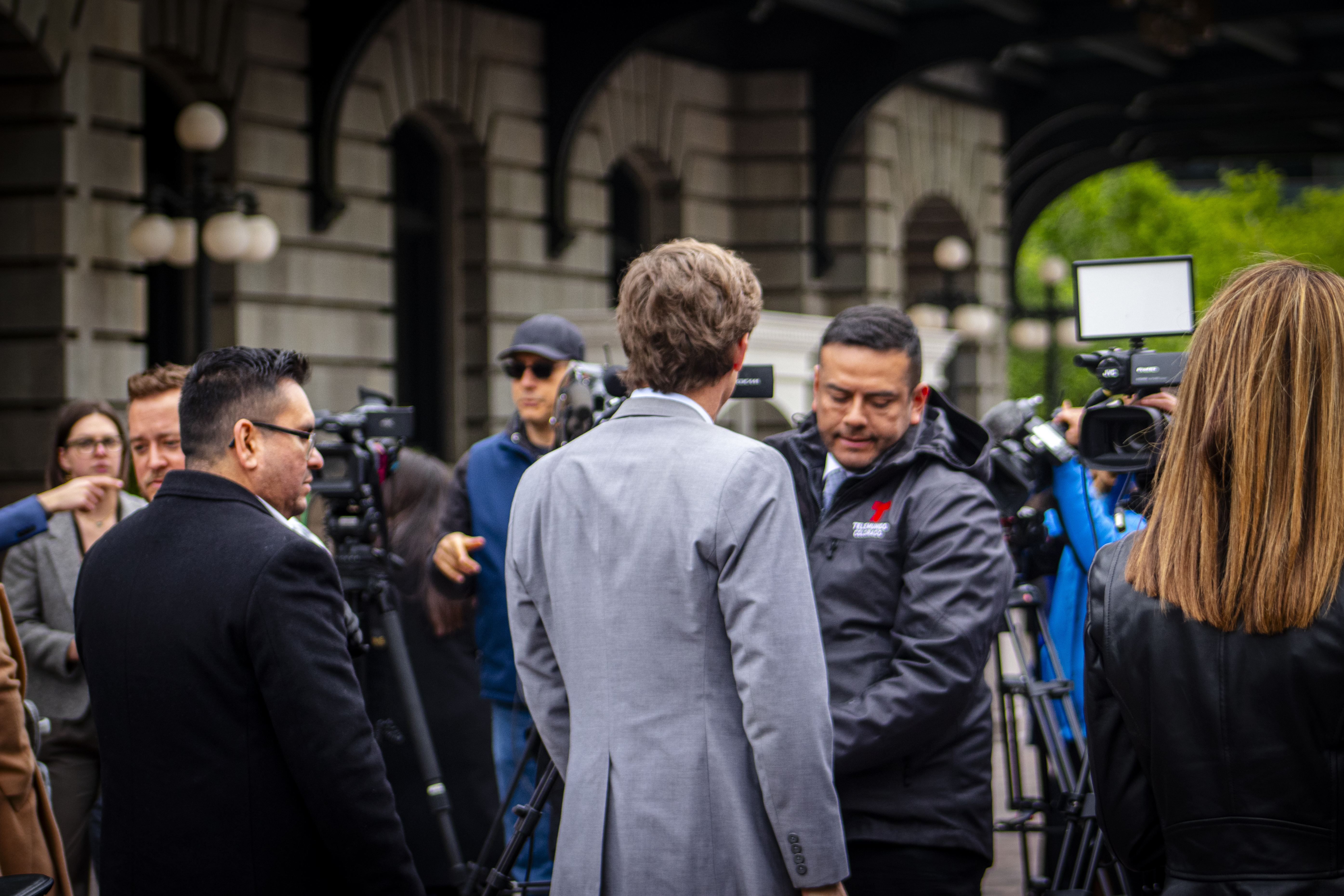
Outside Union Station earlier this month, the Downtown Denver Partnership, councilmembers, finance leaders and a Regional Transportation Department board member joined Johnston, who announced his administration’s 2024 “Vibrant Denver” plan.
He pointed to the city’s central transit hub as a model for the future of downtown.
Union Station had a major redevelopment costing nearly $500 million that finished in time for its centennial anniversary in 2014.
His “uniquely Denver” plan is to finance the restoration of downtown in the same way Union Station was a decade ago — via tax-increment financing or TIF, in which the net, new tax revenues expected within a geographical area is used to finance future projects.
The Downtown Development Authority (DDA), the taxing authority that financed projects for Union Station using TIF, was how the city paid back many of its federal loans for Union Station.
Johnston proposed to vastly expand the authority, which currently covers Union Station and one block on Market Street, to include most of upper downtown.
The expansion would cover the area between Colfax Avenue, Grant Street, Speer Boulevard and 20th Street and most of the buildings the city studied for conversions last year.
It would open up more than $500 million to be used for redevelopments by 2038. Denver officials calculated the number by projecting the district’s tax revenues with a 2% annual growth rate, the city’s finance department said.
Behind the idea is the assumption that, with the prospect of a funding stream to finance projects, downtown Denver would attract businesses and taxes would incrementally grow. The flip side of the coin is that if downtown Denver faces an economic downward spiral, it would erase expected incremental tax revenue increases.
In deciding to expand the taxing authority, the city has actually yet to decide what the funds would be used for, promising to seek public input, though the mayor suggested during his announcement that office conversions, beautifying public spaces or investing in child care services for downtown employees could be on the table.
“The upcoming Downtown Area Plan process will engage the community to help identify and prioritize what type of projects are best suited for Downtown Development Authority funds and how the city can best support the transition of Downtown to a Central Neighborhood District,” said Huff, the Community Planning and Development spokesperson.
The funds also won’t be available until at least 2025.
The expansion first has to be approved by city council in the fall and applications for projects could open near the end of the year.
For Goldstein, there’s “nothing” out right now to financially incentivize office conversions, such as The George. A TIF district might help, but he worries it won’t be enough.
“It’s just not going to yield a large offset for construction cost reduction,” Goldstein said.
And potential TIF funding is still months away from materializing.
He’s worried about the pace of accomplishing what needs to be done for what is supposed to be Denver’s crown jewel.
“If the city continues down the path that it was headed at the time the mayor took office,” he said, “then we’re going to end up with stifling levels of red tape.”
But the developer’s biggest concern is that, even before Johnston came in power, the city lost some of its work ethic during the pandemic.
“There’s sort of this mindset of ‘Let’s solve problems. What are we going to do today?’ I feel like that’s coming back,” he said. “But it was surprising how quickly it left our culture.”