Denver’s affordable housing goals collide with regulatory hurdles
Editor’s note: This is the second in a four-part series looking into Mayor Mike Johnston’s priorities for 2024. This installment focuses on the mayor’s goal of increasing affordable housing units. Read about the mayor’s campaign to revitalize downtown Denver, reduce violent crime and tackle homelessness. You can also find the series here.
Parking lots typically don’t inspire much imagination or inspiration — they cost a lot in certain parts of town, can be hard to get in and out of, and there never seems to be enough in Denver’s most popular hubs.
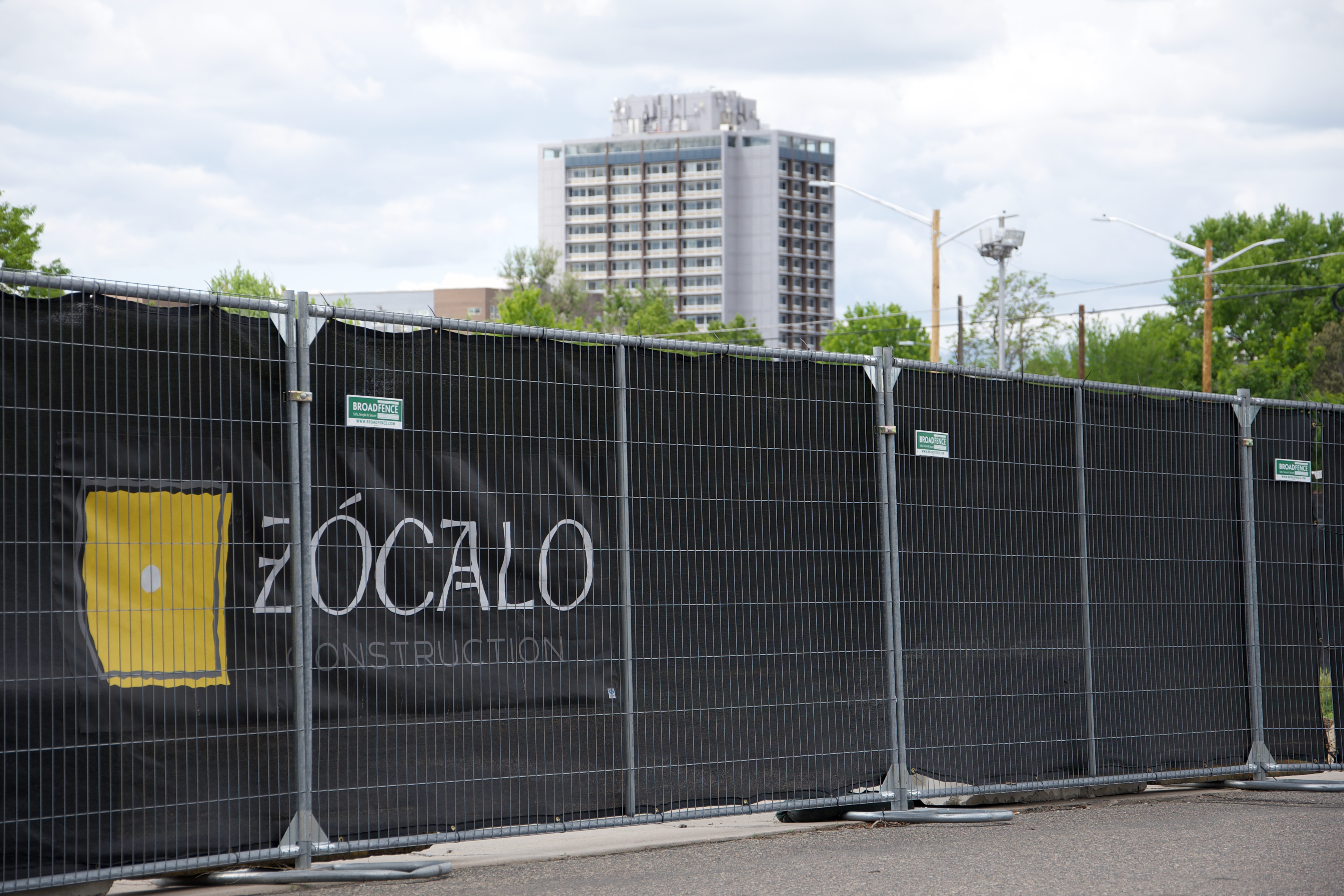
But David Zucker, owner and CEO of Zocalo Community Development, sees their potential.
Specifically, their potential to evolve into housing.
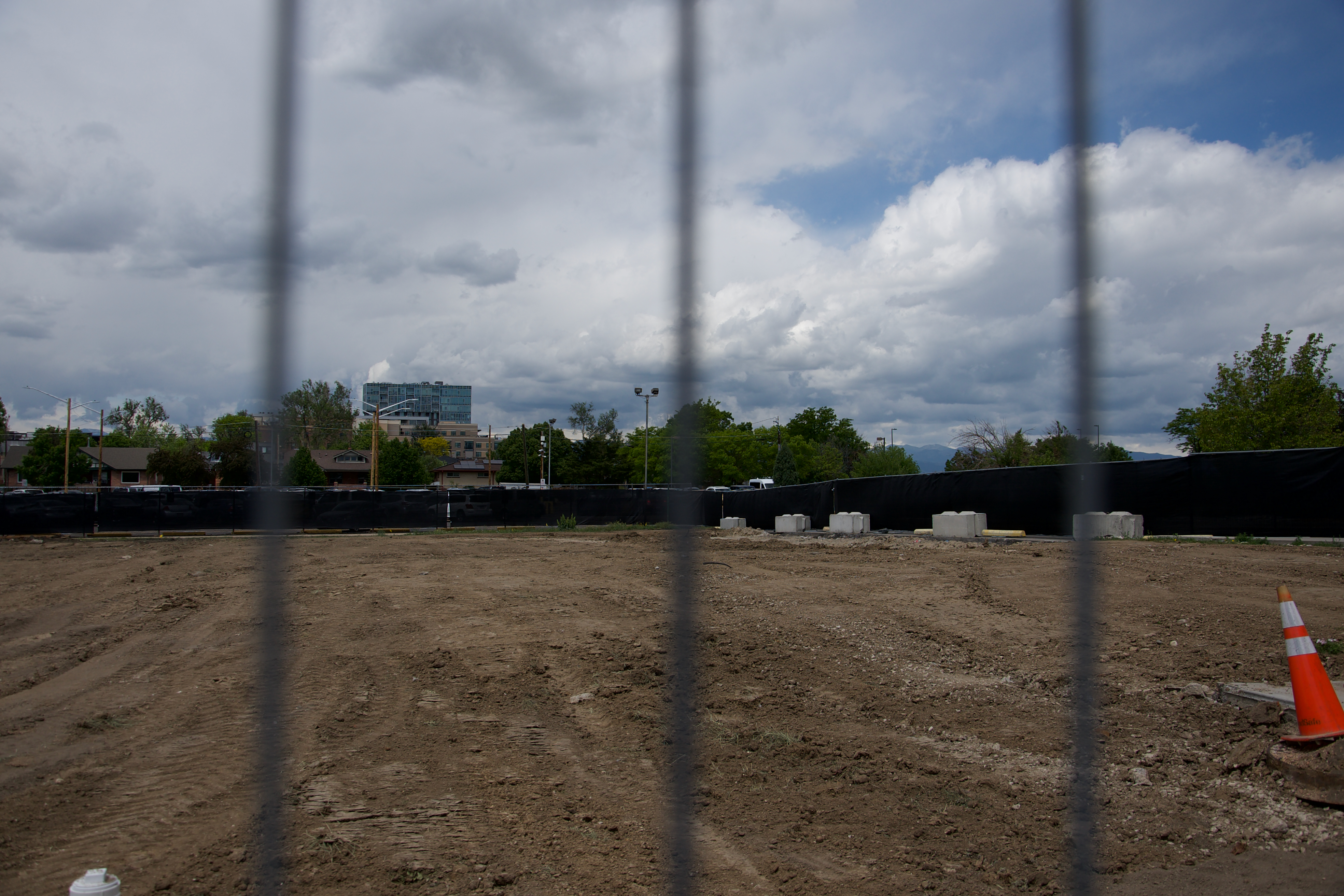
And he has been trying for nearly a decade to break ground on a parking lot he purchased near the Sloan’s Lake Medical Center and kitty corner to Sloan’s Lake Park, roughly where 16th Avenue and Meade Street would intersect were it not for the medical center parking lot.
The multifamily development, as envisioned, will feature a number of market rate units and a tax increment financing mechanism to help fund construction of an affordable housing complex next door. In many ways, the area would resemble an entire neighborhood, with a mixture of incomes and attracting people from all walks of life, Zucker said.
And, to the developer, it appears to play perfectly into addressing a challenge Denver faces — housing affordability.
That’s when Zucker’s vision collided with government regulation.
Zucker must negotiate through a slew of bureaucratic hurdles and the City Council, which has repeatedly delayed the project’s groundbreaking.
In many ways, Zucker’s project illustrates how the proclivity of Denver mayors, not just Mike Johnston, for announcing ambitious ideas — from homelessness to public safety to economic vitality — runs counter to either the practical realities on the ground or regulatory roadblocks.
An ‘easy bullseye’ in a quagmire
While his current project at Sloan Lake is at risk of floundering, Zucker remains hopeful about the future of affordable housing developments in the city. He said he has noted a shift, in which the city has adopted a “whatever it takes” attitude toward affordable housing. Zucker said he recognized that, for the first 10 months in office, Johnston’s focus was “rightly” on housing homeless people. Recently, however, he is seeing what he described as necessary and understandable “refocus on permanent housing.”
“Now, it is a slow process of developing long term affordable housing … for a typical affordable project, from concept to first resident is probably five years,” he said. “I believe that the Sloan Lake project should be a really easy bullseye.”
That ‘easy bullseye’ is in a quagmire.
Notably, the developer has yet to succeed in convincing the City Council to let the project start. In 2019, a previous council had approved the urban rezoning for the project.
In an email, Councilmember Amanda Sandoval, the chairwoman of the Land Use, Transportation and Infrastructure Committee, said she is unsure of the status of the tax increment financing for the development, though she hinted it may appear before council in the coming months.
The proposed development is in Sandoval’s district.
Meanwhile, Council President Jamie Torres did not respond to The Denver Gazette’s request for comment on the status of the project.
In an interview with The Denver Gazette, Zucker hinted of exasperation.
“Would I do a project like this again? Yes, as an affordable project. Yes, as a market rate project. But not as this interwoven complex (development),” Zucker said. “I won’t do this again.”
25,000 units, 8 years
Housing prices and the cost of living have skyrocketed elsewhere in the country, but their effect is acute in Denver, where officials have long declared a housing crisis.
Some of the problem comes down to affordability. A Common Sense Institute study noted that the number of hours necessary to pay a mortgage rose from 44 in 2011 to 96 in Colorado last year. Other states also experienced that spike, but it was “especially severe” in Colorado, the report said, noting that, for rent, it rose from 45 to 87 hours.
The CSI report said the largest contributor to unaffordability is the fact that wages have not kept pace with housing prices and rents, something that’s also happening elsewhere in the country.
Against this backdrop, the CSI report that local governments, such as Denver, play a particularly crucial and direct role in shaping housing — precisely because they implement zoning regulations, issue building permits and conduct housing code inspections.
Denver has adopted several initiatives to nudge the market and increase that housing inventory. Notably, the city council and then-Mayor Michael Hancock created a dedicated affordable housing fund, which was expected provide $150 million over the course of 10 years to support or build 6,000 affordable housing units.
The city also passed an ordinance requiring new developments of over 10 units to dedicate a certain number to affordable options, ranging between 8% and 15% of the area median income, depending on development type. In lieu of allocating affordable units, developers may pay a fee, ranging from $250,000 and $478,000.
The crisis has outlasted previous mayoral administrations.
And now Johnston is promising to make a dent on the challenge. A few months ago, he declared it as a one of four citywide goals for his administration.
By the end of eight years — two terms as mayor, assuming he survives his reelection campaign — Johnston wants to add 25,000 “permanently” affordable housing units. As a start, he promised to permit, secure and support the development of 3,000 units this year. He told councilmembers last year, he would leverage city, state and federal funding of up to $100 million to make that happen.
Ultimately, he said, he envisions a city that is “affordable for all.”
By “permanently affordable,” Johnston said that means someone is not paying more than 30% of income for housing.
“What we do is we finance the construction of a unit from the beginning with public dollars,” he said. “It’s not rent control. That allows it to be built in a way that it stays affordable.”
That 30% threshold is not new. Both Denver and the U.S. Department of Housing and Urban Development define “affordable housing” to mean costing roughly 30% of a person’s income. The city additionally builds in some flexibility by using a sliding scale of area median income (AMI), which sets rents as a percentage of that value. Denver’s median income stood at $88,213 — plus or minus $3,776 — in 2022, according to the U.S. Census Bureau.
Johnston, who came out out against rent control during his campaign for mayor, said these deals are done through deed restrictions, a mechanism to preserve the long-term affordability of a unit that was sold below market levels as a result of a government subsidy.
In Denver, the AMI is used to determine that level. For example, a two-bedroom apartment rated at 80% AMI cannot have rents higher than $2,234. A 50% unit cannot exceed $1,396. There are also limits on income, which affect which housing a prospective resident can move into. Deed restrictions ensure landlords cannot pump up rent arbitrarily and guarantees rent only goes up if a resident’s income goes up, Johnston said.
Since his election, Denver has added just under 500 units of affordable housing, according to the city’s dashboard, which tracks completed and planned units.
To the mayor, market rate and affordable housing goes hand in hand, seeing them as complementary tools.
“What we’ve seen is that for every market rate unit we can bring to Denver, that creates 0.8 affordable units,” he said.
So, in theory, a 100-unit market rate development could mean another 80 affordable units built.
Sun Valley neighborhood
As a child, Annete Castro moved around a lot, so she had just to “make the best of” the inconvenience of transitioning from one place to another.
But now Castro might have found permanency.
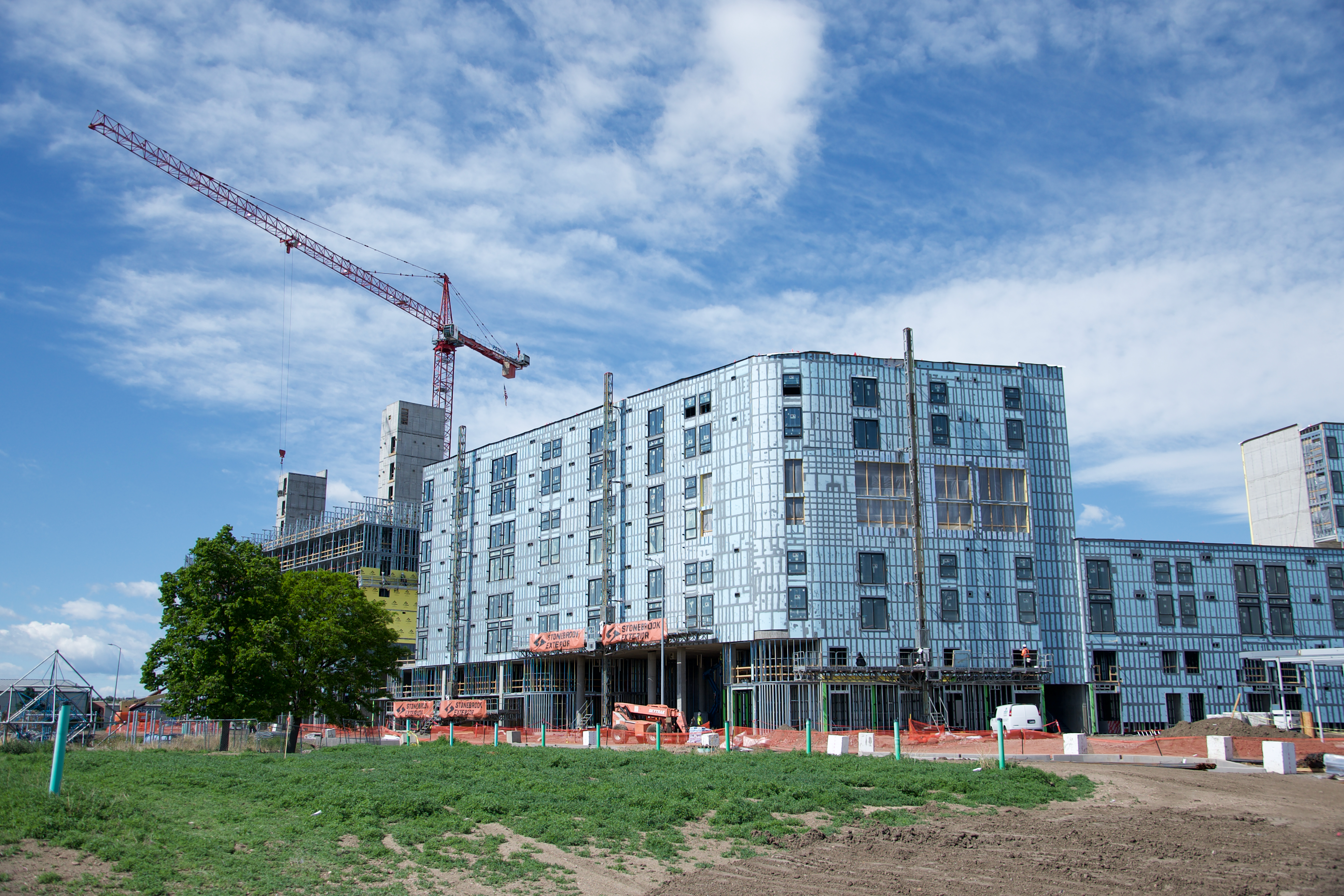
The Denver Housing Authority has been developing the Sun Valley neighborhood after winning a $30 million grant from the federal Department of Housing and Urban Development to begin work on the replacement of 333 “obsolete” public housing buildings.
For Sun Valley, the idea is to take a traditional public housing area and redevelop it it into a higher density, transit-oriented housing, offering more units while improving their quality. Sun Valley is also close to transit and downtown, fitting well into the push for denser housing close to transit.
The entire project will bring 960 mixed income units, roughly tripling the number of affordable units in the footprint of once-obsolete structures.
Recently, two of the buildings — Thrive and Greenhaus — officially opened. The housing authority is adding a park along the banks of the Platte River, as well as several other residential buildings, including senior housing.
Castro, who lives on supplemental security income, actually resided in Sun Valley when it was a Section 8 housing. During the redevelopment, Castro was moved to a different location temporarily.
At long last, she and her dog Paco, a chihuahua-Pomeranian mix, journeyed from the old development to the new one after DHA offered her a spot at Greenhaus.
“With Denver housing, you have to make the best out of wherever they put you,” she said. “But DHA asked me if I wanted to move to Greenhaus and I said, ‘Yeah, I would love to.’ So, I did and I like it. I have no complaints.”
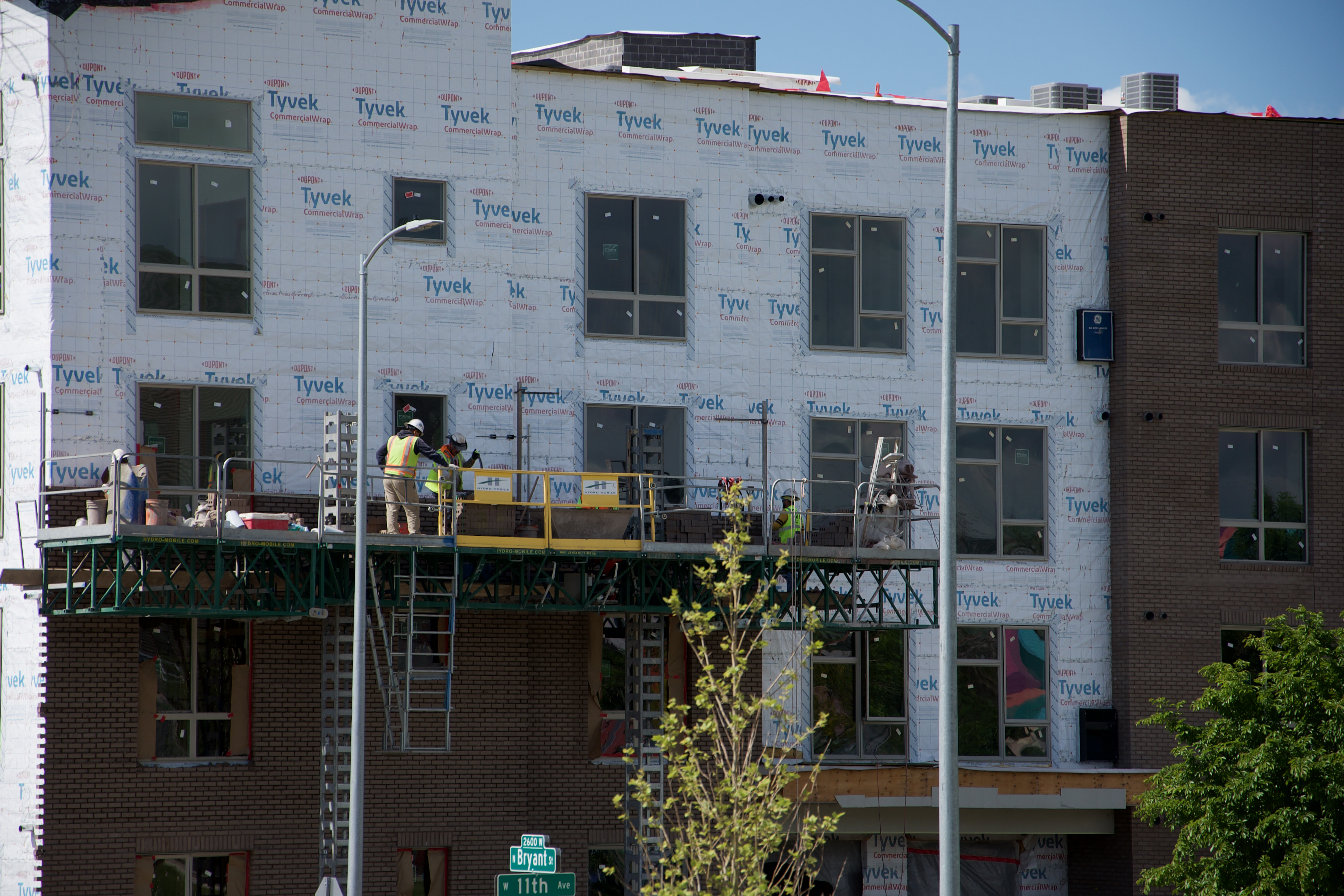
The city’s housing efforts have led to some successes. The latest affordable housing development — known in the portal as “Chestnut Lofts” but officially called “The Burrell” — brought 49 affordable for sale units to the Five Points neighborhood. “The Burrell,” located at 3575 Chestnut St. in Five Points, officially opened on May 9. Another project, called the 655 Broadway Apartments for its 655 N. Broadway address, offers 110 units.
Of the 11 projects completed since Johnston’s inauguration, six have leveraged city funds.
But successes like Sun Valley are not guaranteed.
One project was dead on arrival, while another remains stuck in bureaucratic purgatory.
Park Hill Golf Course
Property owners Westside Investment Partners first floated the idea of redeveloping the 155-acre Park Hill Golf Course as a mixed-use, mixed-income housing development.
The proposed development promised up to 3,000 new units of housing and a much-needed grocery store — and energy, supporters said — to the area.
Westside principal Kenneth Ho said the area of North Park Hill had formerly been served by several Black-owned business concentrated along Holly and Dahlia Streets.
“Those are gone,” he told the council in December 2022. “And that’s not coincidental, it’s the result of underinvestment and a result of redlining.”
Indeed, North Park Hill lies in an area known as the “Inverted L,” which is a string of neighborhoods that have historically been underinvested in.
The city has attempted to take steps to increase investments in the area.
And the City Council, which supported the plans, referred the question of the golf course’s future to voters last year.
Residents overwhelmingly shot it down, siding with critics who insisted that while affordable housing is needed in Denver, such projects should be built near the property, not on it, in order to preserve its character as open space. To supporters, it was a missed opportunity to add thousands of units to Denver’s housing inventory.
The land has since reverted to being a privately owned open space that can only be used as a golf course.
Sloan Lake project
Zucker, the Zocalo CEO, said he owes a debt to Denver, where he has found success as a developer.
“I owe a debt to the city of Denver,” he said. “Building here has been tremendously successful and rewarding.”
But his proposed development at Sloan Lake is stuck in development purgatory.
“If it’s financially viable I’m going to do it. That’s my history,” he said. “But it’s getting increasingly difficult to do so which is the necessity of tax increment financing for Sloan Lake.”
Zucker’s project, located at 17th Avenue and Newton Street across from the lake’s southeast shore, would see a parking lot rebuilt into two major housing projects. The first would house market rate units, while the second would be funded via tax increment financing and all the units would be affordable.
But Zucker has run into one challenge after another.
In February, the City Council tossed a public hearing for the project, citing issues that needed to be “ironed out,” according to Councilmember Amanda Sawyer. Specifically, the Denver Urban Renewal Authority, which acts as a bridge between the city and developers, said negotiations hadn’t been 100% completed.
DURA Executive Director Tracy Huggins said the authority is waiting on Department of Housing Stability and the city.
“What is at issue right now is that continuing negotiation between the developer and the city regarding the affordable units specifically in the market rate tower,” she said. “We at DURA are simply waiting for that to get resolved so we can move forward with our request of city council.”
In an interview with the Denver Gazette, Zucker sought to maintain a sense of optimism.
“I don’t feel at all as if there is hesitation or reticence,” he said. “The council and administration did not ask for some of the crises they’ve been handling.”
He added: “And I, as a developer, need to give them grace, because this is a tough time … and my belief is that where we can, we can create more balanced more inclusive communities that help to address rampant displacement as a matter of responsibility.”
Writing on the popular forum Reddit, one resident welcomed the news.
“This will be so much nicer than the parking lot that’s there today. My family is only sad it’ll be so many years before it gets built, given we’ve already been waiting for years,” the resident said.
The resident posted that comment two years ago.