How Mayor Johnston plans to lower Denver gun violence by 20%
Mayor Mike Johnston, along with the Denver Police Department, look to target 5 specific areas to help reduce gun crime

Editor’s note: This is the last in a four-part series looking into Denver Mayor Mike Johnston’s priorities for 2024. This installment focuses on the mayor’s goal of reducing violent crimes in Denver. Read about the mayor’s campaign to increase the affordable housing inventory, tackle homelessness, and revitalize downtown Denver. You can also find the series here.
Around sixth months into his wife’s pregnancy, Daniel — who declined to provide his last name due to safety concerns — was working late nights at his job. His wife was at their new home near East Colfax Avenue and North Verbena Street.
He received a call from his panicked wife, telling him that there was a drive-by shooting near the home and shots had ricocheted through their living room.
A bullet bounced off of the television and entered the pillow directly beneath where his wife had been laying her head.
A split second movement ultimately saved her life and their soon-to-be son.
“That’s one of the realities with this neighborhood,” Daniel said. “We try to keep to ourselves.”
Daniel’s neighborhood is one of the five “hot spots” that Denver Mayor Mike Johnston listed as a priority to improve public safety, outlining an ambitious objective — reduce gun violence by 20% by the end of the year.
The public safety drive is part of a multipronged campaign by Johnston to make a measurable dent in the city’s biggest woes, which include tackling homelessness, revitalizing downtown and increasing the city’s affordable housing inventory. For each goal, the mayor unveiled a series of actions backed by significant amounts of taxpayer spending.
But there are hints of tension within City Hall. The mayor envisions a surge of police patrols and officers at these hot spots, while the police chief appears wary of the potential for more arrests.
The hot spots
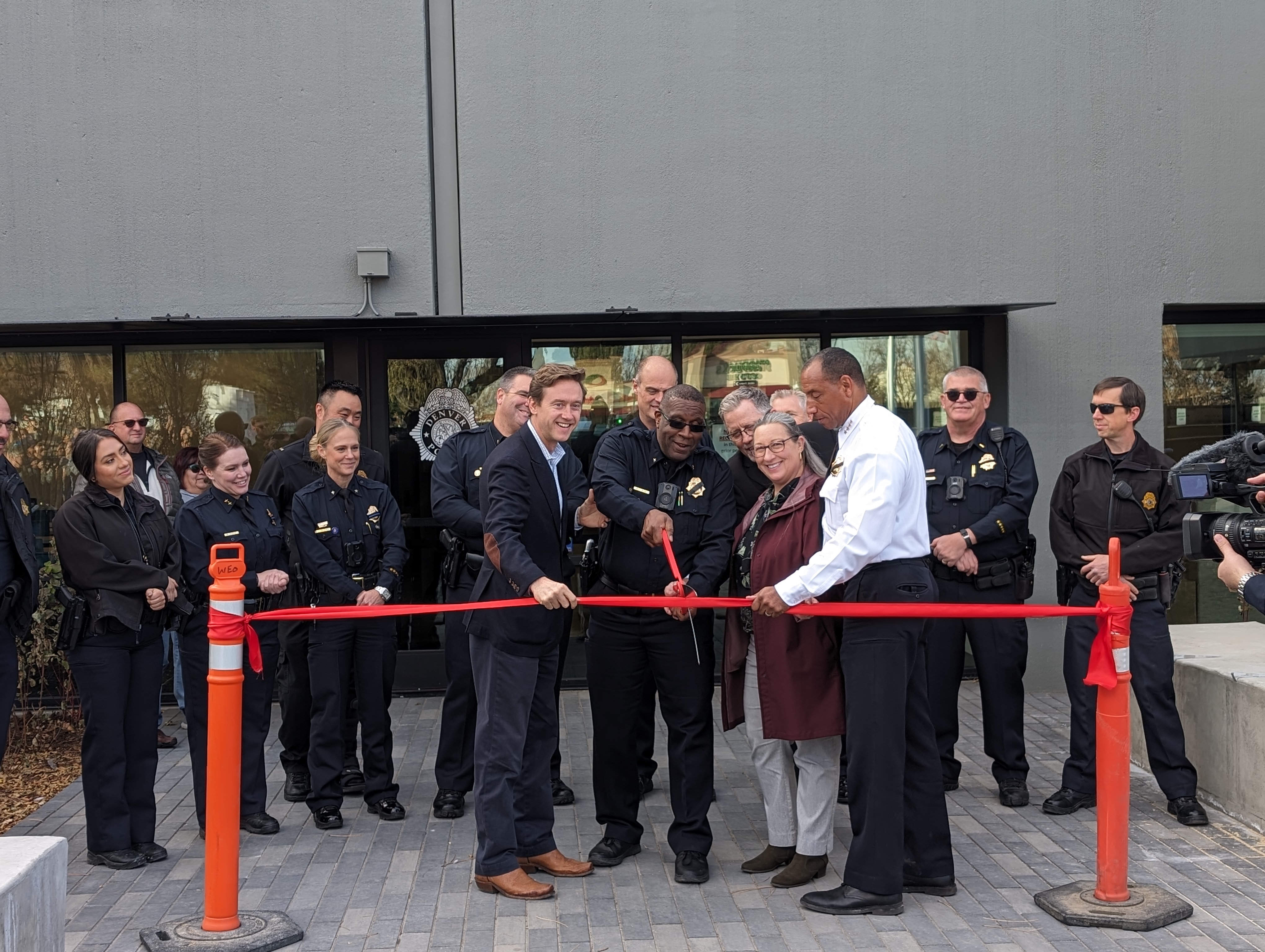
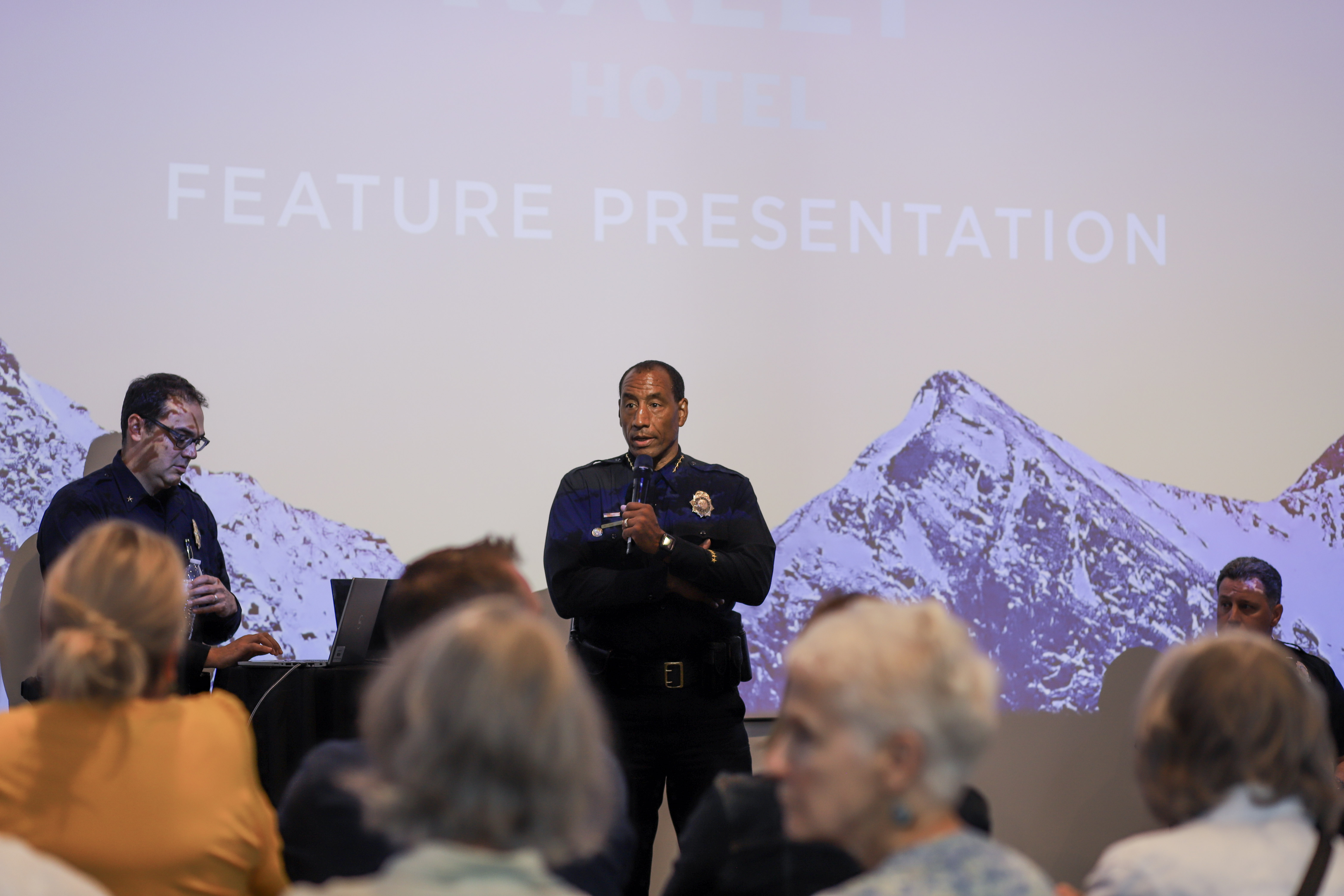
The campaign has the buy-in of Denver Police Department Chief Ron Thomas.
“It’s reasonable, but it is lofty,” Thomas said of the goal. “The good thing about having a lofty goal is you may just get there. How much better is the city when you get there?”
The idea is not novel. The campaign targeting the five hot spots throughout the city, in which gun violence has steadily risen past Denver’s average, harkens back to a pilot program launched by former Mayor Michael Hancock between 2020 and 2022.
That campaign requires more than just throwing additional Denver officers into the areas — the communities and city partners must work together to help increase prevention, according to Thomas, who argued that policing shouldn’t be the sole response to crime.
“We really have to take advantage of other city agencies that have tools and, maybe to a greater degree, understand what community partners can do,” he said. “Not that long ago, police thought they were the experts and could come in and solve everything, not really understanding the power of community to help us identify those problems.”
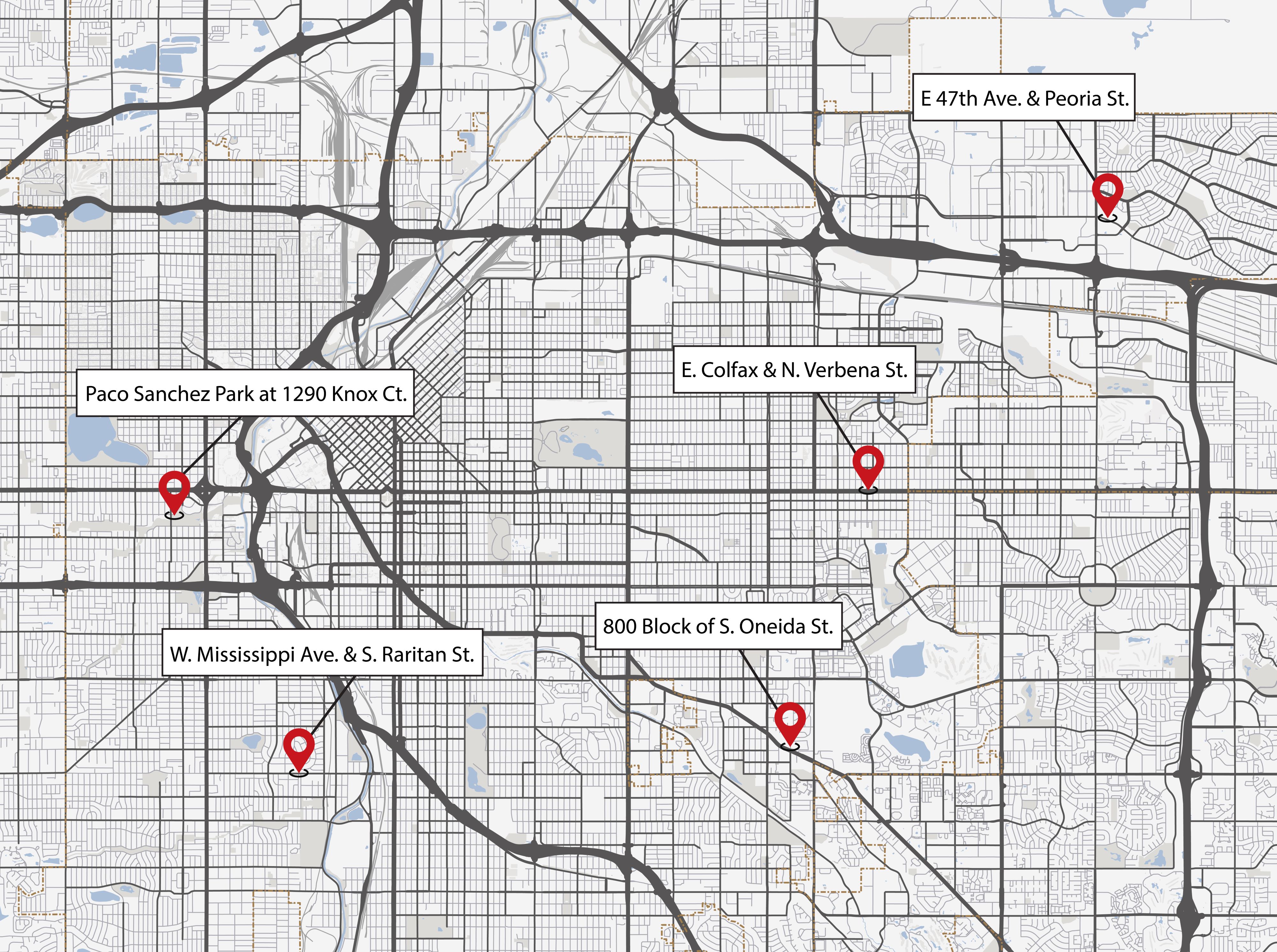
Earlier this April, Johnston announced that the goal to lower gun violence by the end of the year would start with focusing on these five areas throughout the city:
Paco Sanchez Park at 1290 Knox Court
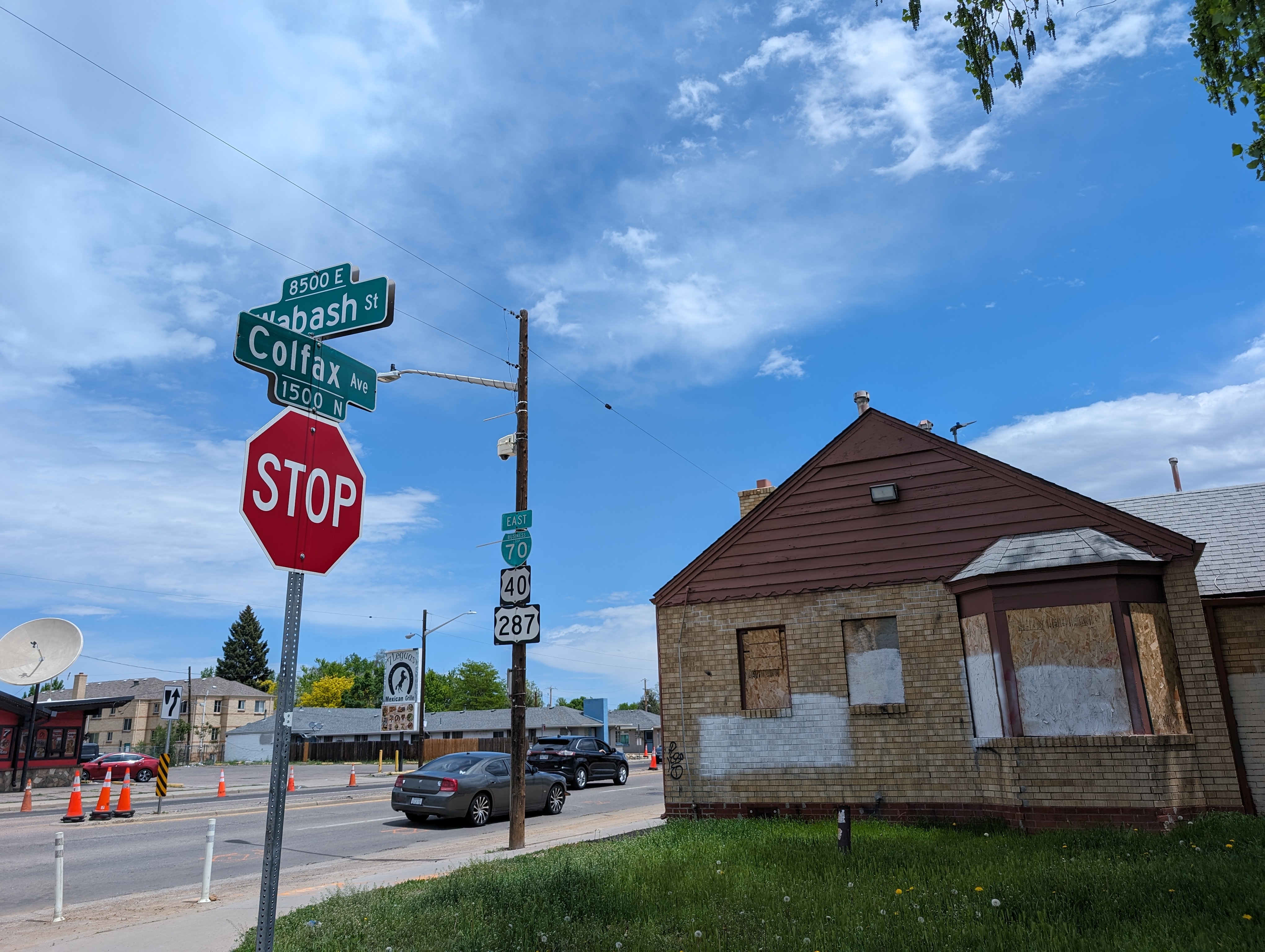
East Colfax Avenue and North Verbena Street
800 Block of South Oneida Street
Mississippi Avenue and Raritan Street
47th Avenue and Peoria Street
The city picked these areas following reviews of violent crime statistics, according to Thomas. The specific areas are not necessarily the most violent places in the city, he emphasized, but they experienced a significant increase in violence over the past year.
The spots are then designated as “Place Network Investigations” sites — a tactic used by other police departments nationwide to pinpoint high-crime areas and work to reduce the crime rate through the combined efforts of multiple departments.
The idea is to find, identify and build cases against people who operate crime networks in the specific area.
The shootings
Calls for service within a half-mile radius around each hot spot yielded the following reported shootings per year:
47th and Peoria: one in 2022, five in 2023, one between January and March 2024
800 S. Oneida St.: three in 2022, eight in 2023, two between January and March 2024
E. Colfax and N. Verbena: 11 in 2022, 19 in 2023, four between January and March 2024
Mississippi and Raritan: two in 2022, three in 2023, three between January and March 2024
Paco Sanchez Park: nine in 2022, 12 in 2023, one between January and March 2024
Near 47th and Peoria, ShotSpotters — gunshot sound detectors placed by DPD — identified 172 shots in 2022. Last year, 193 shots were recorded, and, so far between January and March this year, 49 were detected.
Around East Colfax and North Verbena, more than 300 shots were detected by ShotSpotters in 2022 and 2023. Already, 75 were recorded in just the first three months of this year.
Paco Sanchez Park’s ShotSpotters also reported more than 250 shots fired in 2022 and 2023, with 65 in the first three months of 2024.
There are no ShotSpotters at the other two locations.
When asked why gun-violence numbers have risen in all five areas over the past few years, Johnston said the causes may include a lack of police presence, as well as other needs, like boarded up buildings and the absence of businesses.
“Part of the challenge is the need for law enforcement,” the mayor said. “Oftentimes, there are other structural challenges in that neighborhood that we haven’t addressed that are making it easier for people to commit crimes.”
Some of the increase is due to the “transient nature of people that live in these areas,” said Thomas, who added that some of it is due to drug issues that have migrated to the area.
For some hot spots, like lower downtown, the increase is because it’s an entertainment district, which means it draws a lot of people at certain times of day.
The efforts begin with identifying those exact needs, according to Thomas.
It is unclear if more cops and resources are available.
The city’s budget for 2024 earmarked $8.2 million to recruit 167 new Denver police officers to reach the department’s “full authorized strength.”
Elected officials allotted roughly $107 million for public safety for 2024, though it’s unclear what effects recent cuts and budget adjustments bode for the rest of the year. The city, which has been looking for ways to save money to pay for its response to the illegal immigration crisis, has proposed cutting agencies’ budgets, including $16.9 million from public safety, which includes fire, police and the sheriff’s office. Add the $11 million for the new Office of Neighborhood Safety — money that will also come from the department — and the agency is looking at $27.9 million of its funds being redirected to other places.
The plan
Hancock’s hot spots project, which launched in 2021, involved bringing various agencies together — such as the Department of Economic Development and Opportunity, the Department of Transportation and Infrastructure, and DPD — to tackle what city officials and others believed to be the various causes of the spike in crime in specific areas.
The Johnston administration plans to follow the same approach this year.
“If it’s a lighting issue, that’s what DOTI does. If it’s a low-opportunity situation, that’s what the Denver Office of Economic Opportunity does,” Thomas said of the plan. “It’s just a regular cadence of continuing to look at the dynamics of the area, identify those dynamics that seem to facilitate crime, then meet with all of our city partners and explain the problems.”
Johnston highlighted four steps in reducing gun violence in these hot spots:
The first step is learning about the specific needs in the area directly from community members. And, as examples, he used a lack of streetlights and boarded-up businesses.
In a way, Johnston is modifying what came to be known as the broken windows approach to policing, but with a heavy emphasis on other forms of intervention. In the mid-2000s, Denver had adopted the policing strategy, which is based on the theory that signs of disorder in a community — such as a broken window in a building that goes unrepaired — can encourage more disorder and crime. In practice, it translates into cracking down on nuisance and disorder crimes with the intention to help prevent more serious ones.
Johnston appears to see the same maladies but seeks to apply a different set of solutions.
“We’ll focus on this ability to surge resources in those places that are the most at-risk,” Johnston said.
The second step would involve increasing police patrols and response times to calls in the high-crime areas.
The third step includes increasing the relationships between police and community members in each neighborhood.
The fourth step is putting more officers on Denver’s streets — broadly speaking and not just at the specific locations.
A tactical or philosophical difference?
While Johnston plans to and believes that placing more patrols and cops directly in the hot spot areas — effectively a surge in officers — is the most effective tool available to the city to combat crime, his police chief offers a different take.
And it’s not immediately clear if the difference between Johnston and Thomas is a matter of semantics or tactics.
Or if they, in fact, fundamentally disagree and their divergent comments offer a window into that conflict.
“The single best intervention to both reduce crime and to reduce the over-incarceration in communities of color is actually adding more officers,” Johnston said. “What you find is the more officers that are present, officers who are out in the streets or officers who come from the communities that they serve, the less likely you are to have crime happen in the first place.”
“We’ve actually put out a really clear belief that we want to put more officers on the street to keep people more safe,” Johnston said of his office.
But when asked if the DPD plans on increasing police and arrests in the hot spot areas, Thomas replied, “No. Absolutely not.”
“We’re not going to be putting more officers in those areas. We’re not going to be increasing patrols in those areas,” he said.
When asked about the discrepancy between Johnston’s remarks about increasing police and Thomas’ preference for the status quo in patrols, Thomas told The Denver Gazette: “I think when he says there’s going to be an increase in police presence, he probably is more referencing the engagement.”
“Yes, we’re going to be doing more community foot patrols. Yes, we’re going to be going to more community meetings. Yes, we’re going to be inviting people to come tell us the challenges that they are seeing,” Thomas said. “But, in terms of having more police officers pull more people over for traffic or stopping more people resulting in more arrests, that’s not going to happen.”
A spokesperson from Johnston’s office said increasing officer capacity means that “DPD is increasing the amount of time spent in specific locations of concentrated violence, but they are doing so in a highly focused manner that allows us to focus on the dangerous criminal networks in the area.”
The idea is to increase the communities’ relationships with officers, not reduce it through over-policing, according to Thomas.
“We know that going in and making a bunch of arrests and having a significant presence really doesn’t do anything but piss people off. I think it impedes trust,” he said.
Hope and crime
Beverly Kingston, director of the University of Colorado’s Center for the Study and Prevention of Violence, argued that offering hope must be a key component of any approach to crime.
“We need to address that motivation to be violent in the first place,” Kingston told The Denver Gazette.
“Hope is a very important variable there,” she added, pointing to a 2009 study that found objective poverty and young people’s perceptions of limited opportunities for their future as the strongest predictors for delinquent behavior in high-risk neighborhoods.
Kingston said a collaborative, holistic approach could work.
“If the police are working in partnership with the community and it’s an approach of community-oriented policing and everyone is working together in collaboration around the safety of the neighborhood, it can be a good thing,” Kingston said.
She claimed that adding more police often leads to mixed results: On the one hand, over-policing and inequities in arrests can occur. On the other hand, a dedicated and hands-on approach can potentially lead to positive outcomes.
“The efforts need to continue past just putting police in place,” Kingston said, pointing to the need for constant communication, training and standards. Expectations also need to be set, she added, continuing with follow-ups to find inequities if present.
Will it work?
While academics like Kingston offer a nuanced take on policing, residents like Daniel, whose home near East Colfax Avenue got shot at, undoubtedly prefer more officers on the streets.
“I firmly believe that you need police presence,” Daniel told The Denver Gazette. “Just showing that there are consequences, it gives the neighborhood something to band together behind.”
Daniel, who was pushing his young child on a swing in his East Colfax neighborhood, said he would welcome a community-driven program to help reduce crime through communicating with police — if it were anonymous.
“I do have to look at the negative things that go on here in the face. I do have a soul inside that makes me feel bad about the things going on here,” Daniel said. “But, at the same time, I do have to keep myself and my family safe.”
A “hot spot” designation brings with it more focus and resources, something one community in Denver saw and also welcomed.
Hancock’s administration had identified the intersection of South Federal Boulevard and West Alameda Avenue as a hot spot in 2021, and throughout 2023, the bustling location was a Place Network Investigations site.
Nuzzled right next to that intersection lies the Far East Center and Little Saigon — a tight collection of Asian-owned businesses and a cultural epicenter for Asian holidays in the city.
Mimi Luong, owner of Truong An Gifts and manager of the Far East Center, was one of the biggest proponents for the concept of Place Network Investigations.
“Having that narrative that we were one of the biggest crime locations made it really tough for business,” Luong said. “So, we reached out to DPD and asked them to bring more police and attention to the area to help protect the community.”
The plan included increased police presence and direct communication with the chief from a community board. Police started participating in events in the center, even teaming up with the Far East Center for the latter’s annual Halloween trunk or treat festivities. The city also installed new security cameras at certain locations.
“It became much safer. People began noticing the changes. We no longer had the narrative that the area was dangerous,” Luong said.
The statistics back Luong’s perception of safety.
Compared to before the intersection was established as a PNI site — between 2016 and July 2021 — to when the intersection was placed as a PNI site — between August 2021 and December 2022 — Alameda and Federal saw 78% fewer shootings than expected, based on gun violence data from DPD.
In fact, all of the five designated PNI sites in 2021 saw lower increases or outright decreases in violent crimes compared to the rest of the city, which saw a 27% rise in violent crimes in the 2021-2022 year compared to before.
The Asian community in the area did not regard the increase in police presence as a threat or as a problem.
“People know that the police are on our side to help protect the community,” Luong said. “You should feel safer because there are police in the area. You should feel safer to go shopping, hang out or walk the streets. You shouldn’t feel scared unless you’re doing something wrong.”
And now Luong is worried about the potential scattering of efforts after the area lost its designation as a “hot spot.”
“Their focus cannot stop just because it isn’t a hot spot. You can’t just stop sending patrols this way because the area is no longer targeted,” Luong said.